
A PulsaCoil fault can interrupt everyday routines when a home suddenly loses reliable hot water. Washing, cooking and getting ready for work become harder when taps run cold or the supply cuts out without warning.
In Eastcote, within the London Borough of Hillingdon, homes include flats, apartments and houses. A hot-water problem can affect a whole household, even when the appliance serves only one part of the property.
The right response depends on the unit and the symptoms. A simple control issue may need a different assessment from a leak or a complete loss of hot water. A specialist can check the appliance and explain the available repair options without guessing from a brief description.
Local appointment options depend on the provider’s coverage and availability. Have the unit model and a clear description of the fault ready before arranging an assessment.
Pulsacoil Repair Eastcote: What Specialist Diagnosis Covers
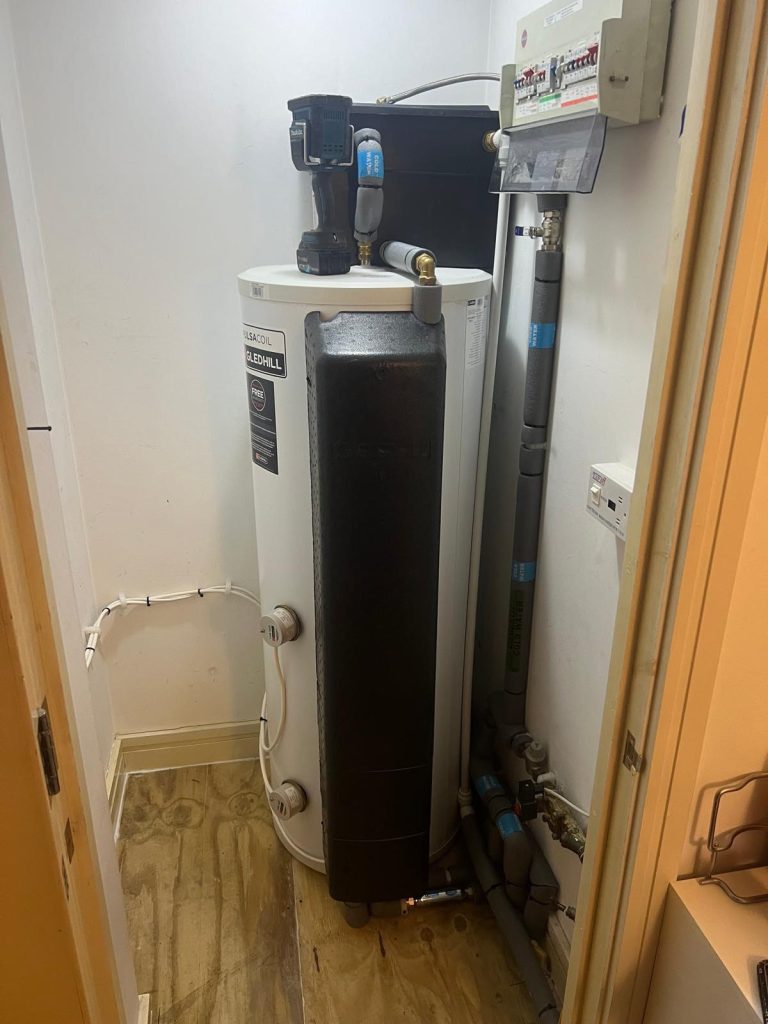
A PulsaCoil stores heat electrically and uses that stored energy to provide domestic hot water. A thermal store is a vessel that stores heat so it can be used later to provide domestic hot water.
The PulsaCoil unit is an electric thermal store, not a conventional boiler. It uses immersion heaters and controls to heat and manage stored water, rather than burning gas or oil to heat water on demand.
A standard hot-water cylinder holds water for direct use. A thermal store holds heat in stored water, then transfers that heat to fresh water when you open a hot tap. This difference affects how a technician checks the controls and components.
On Gledhill’s PulsaCoil Stainless, mains cold water passes through a plate heat exchanger and gains heat from the store. The open-vented design uses off-peak electricity and does not need discharge pipework or a pressure and temperature relief valve. The PulsaCoil Stainless design is specific to that model.
The heat exchanger keeps the stored water separate from the domestic hot water delivered at the tap. This is one reason the system’s layout should not be treated as identical to a boiler and cylinder combination.
Diagnosis needs to take account of the exact PulsaCoil model. A control arrangement or component found on one version may differ on another, so a technician should identify the appliance before deciding what to test or replace.
For a Pulsacoil repair, describe the appliance as an electric thermal store. That wording helps distinguish it from a boiler fault and gives the booking team a clearer starting point.
Tell the booking team that the appliance is a PulsaCoil, rather than describing it only as a boiler.
Which Gledhill PulsaCoil Problems Need an Engineer?
No hot water can have several causes, including a thermostat fault, an immersion-heater problem or low water in the feed-and-expansion tank. Symptoms can point towards areas to check, but they do not confirm which part has failed.
The same symptom may arise from different issues across a PulsaCoil system. The table gives diagnostic possibilities, not confirmed faults; an engineer needs to inspect and test the unit before recommending parts or repair work.
| Symptom | Possible cause | Why it needs checking |
|---|---|---|
| No hot water | Thermostat, immersion heater or low feed-and-expansion tank water | Testing identifies whether heating or water supply is affected |
| Unusual noise | Circulation-pump problem or trapped air | The sound alone cannot identify the cause |
| A leak | Damaged seal, loose connection or excessive water pressure | The leak location and condition need professional assessment |
| No or erratic hot water on PulsaCoil Stainless | Low store water, failed element or thermostat, delivery fault or external Economy 7 time clock | Several controls and components can produce similar symptoms |
On PulsaCoil Stainless, the immersion heater is a 3 kW, 14-inch Incoloy element. It has an 11-inch rod thermostat and a separate manual-reset overheat cut-out. That combination makes correct identification important before ordering parts.
A failed external Economy 7 time clock is one possible cause of inconsistent heating on this model. An engineer can check the clock alongside the unit, rather than assuming the appliance itself has failed.
Leaks need prompt attention, especially if water is close to electrical parts. Do not open the unit or attempt internal electrical work, since this can expose you to further risk and complicate the repair.
If water is near electrical components, keep clear of the affected area and arrange a qualified assessment.
What Happens During a PulsaCoil Repair Visit?
A repair visit should begin with identifying the model and confirming what the unit is doing. The appointment commonly takes about 1-3 hours, depending on the fault and the checks required.
When you book, report any display signal and when the issue began. A clear timeline can help the engineer prepare, while the model name helps identify which parts and controls may be relevant.
- Share the model and symptoms when booking.
- The engineer inspects the unit and carries out diagnosis.
- The engineer explains the fault and proposed work.
- You receive a written or clearly stated quote before approval.
- Approved repair work is completed and the system is tested.
You may be asked to identify a PulsaCoil 2000, A Class, BP, Eco or PulsaCoil 3. If you cannot find the model name, describe where it appears on the appliance or share a clear photograph when booking.
Diagnosis comes before agreement to repair. The engineer should explain what the checks show and what work they recommend, so you can consider the proposed solution before authorising it.
The time needed depends on the fault and the checks involved. A straightforward repair may be completed during the first visit, while a more involved issue can require further investigation or another appointment.
Available spare parts also affect whether a repair can be finished on the day. A specific component may need to be sourced, or the engineer may need to confirm its suitability before fitting it.
Ask for an updated explanation and quote if inspection reveals that the proposed work has changed.
What Does Pulsacoil Repair Cost in Eastcote?
PulsaCoil Group lists a £399 fixed-price repair including VAT and a £229.99-per-hour one-off repair rate, both effective from November 2025. These are the company’s published charges, not a standard price for every repair provider.
The fixed-price repair has one stated total charge. PulsaCoil Group says it includes no call-out fee and a 12-month workmanship guarantee. Its standard-rate one-off repair is charged by the hour, so the final charge depends on the time billed.
| Route | Published charge | Stated terms |
|---|---|---|
| Fixed-price repair | £399 including VAT | No call-out fee and 12-month workmanship guarantee |
| Standard-rate one-off repair | £229.99 per hour | Hourly charging |
| Replacement installation | From £2,245 plus VAT | Final scope and unit confirmed in a written quote |
These PulsaCoil Group prices do not describe every provider’s charges or terms. Compare like with like: check whether a quote covers diagnosis, labour, parts, testing and any return visit that may be needed.
A monthly repair-and-care arrangement is a separate option from a one-off repair. Read its terms to see which repairs, parts and visits are included, and what exclusions or limits apply.
Check the business identity as well as the quote. PulsaCoil Group is a division of MK Electrical Group Ltd, registered company number 14672952. The company name on your paperwork should make clear who is providing the work.
Before authorising a repair, ask what the charge covers and whether the quoted amount can change if the work expands. A guarantee on workmanship is not the same as a guarantee on every component or future fault.
Confirm the charge basis, included work and workmanship cover in writing before agreeing to a repair.
Repair or Replace a PulsaCoil 2000?
A single fault does not automatically mean a PulsaCoil 2000 needs replacing. The choice should follow a diagnosis of the unit and a comparison of the written repair and replacement scopes.
A model name alone cannot show whether replacement is necessary or whether a particular new model will suit the property. Ask for both options to be set out clearly, including the work and equipment each involves.
- Is the fault isolated, or have breakdowns become recurring?
- What is the condition of the existing unit?
- What repair has the engineer identified after diagnosis?
- What would a suitable replacement cost, and does it suit the property?
Repeated issues can change the value of another repair, but age or model name alone does not settle the decision. Consider the condition of the unit alongside the specific fault and any previous repair history.
A repair quote should identify the work proposed and the parts required. A replacement quote should name the new system and set out the installation work, so you can compare more than the initial charge.
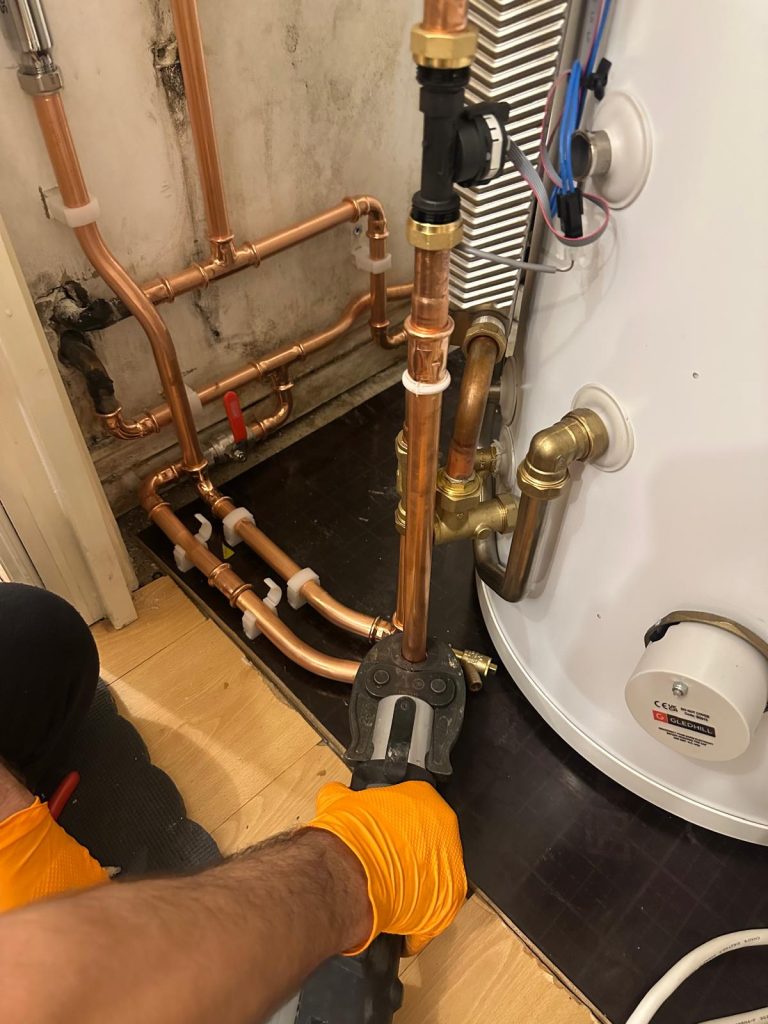
Replacement involves more than changing a cylinder. The installer removes the existing unit, fits the new system, carries out any required plumbing and electrical work, then tests and commissions the installation.
Those steps matter because a new appliance must work with the property’s connections and electrical arrangement. A quote that names only the new unit does not describe the full replacement scope.
For a PulsaCoil 2000 replacement, ask how the proposed unit has been selected for the property. Do not assume that a model number proves compatibility with a newer system.
Compare the full written repair and replacement scopes, not just their headline charges.
Which Replacement PulsaCoil Suits the Property?
Choose a replacement capacity around the household’s hot-water demand, not simply the size of the old unit. PulsaCoil Stainless comes in 150, 180 and 210 litres; Advance ETS comes in 160 and 210 litres.
The systems also differ in their water-delivery method and electrical needs. Check those details, the filling arrangement and capacity before deciding which thermal store suits your home.
| Feature | PulsaCoil Stainless | Advance ETS |
|---|---|---|
| Available capacities | 150, 180 and 210 litres | 160 and 210 litres |
| Water-delivery method | Electronic system with PCB, plate heat exchanger, sensors, pump and flow switch | Mechanical blending valve |
| Electrical requirement | 3 × 20-amp double-pole switches | 2 × 20-amp double-pole switches |
| Cylinder warranty | 5-year sliding scale | 10 years |
PulsaCoil Stainless has a 1-year parts warranty and a 1-year labour warranty. Its estimated installation lead time is 30 working days. It has an external feed-and-expansion tank, a small sight glass and manual jug filling.
Advance ETS has a 2-year parts warranty and a 1-year labour warranty. Its estimated installation lead time is 7-10 working days. The model has an internal feed-and-expansion tank, a large sight glass and a built-in filling loop.
Allow 35-45 litres of thermal-store capacity per resident as a sizing guideline. Under this calculation, a standard four-person household needs a tank of at least 200 litres.
Household habits affect demand. A shower uses about 18 litres per minute at 40°C, equivalent to 11 litres at 60°C. A bath uses about 100 litres at 40°C, equivalent to 60 litres at 60°C.
Daily hot-water use per person can be grouped as low at 20-30 litres, average at 30-50 litres, or high at 50-70 litres. Longer showers, frequent baths and overlapping use can raise household demand.
Do not choose on capacity alone. A Stainless installation needs three 20-amp double-pole switches, while Advance ETS needs two, so the electrical setup can affect which option suits the property.
Ask the installer to confirm the household sizing and the electrical requirements for the proposed model.
How to Choose a PulsaCoil Engineer in London and Check Reviews
A suitable local engineer should be able to discuss your PulsaCoil model and confirm whether your Eastcote address can be booked. PulsaCoil repair in London depends on the specific address and appointment availability.
PulsaCoil Group describes its Greater London repair coverage as subject to availability. Coverage does not guarantee a particular visit date, so confirm the postcode and available appointment options directly.
When checking for a PulsaCoil engineer near me, ask whether the engineer works on your exact model and can explain the diagnostic approach. Check that you will receive a quote before work begins.
The model name helps make that conversation specific. PulsaCoil A Class, PulsaCoil BP, PulsaCoil Eco and PulsaCoil 3 are examples you may be asked to identify when enquiring.
A Birdeye listing named Emergency Electrics and Heating 24/7 Gledhill Pulsacoil Repair London shows 281 reviews. That is a listing count, not a recommendation or proof of service quality.
Read recent review details rather than relying on the total alone. Look for comments about communication, diagnosis and completed work, and check how the business responds when a customer raises a complaint.
Reviews for Gledhill PulsaCoil Repair London can help you assess reported customer experiences, but they cannot establish whether a provider has a slot for your property. Ask direct questions about availability and the work offered.
Confirm the postcode, access arrangements and available appointment options directly with the provider.
Does a Gledhill PulsaCoil Need Annual Service?
Maintenance advice depends on the PulsaCoil model, so distinguish PulsaCoil Stainless from other units. Gledhill states that PulsaCoil Stainless does not require annual maintenance or a safety check.
PulsaCoil Group separately recommends an annual maintenance check of a Gledhill PulsaCoil system by a qualified technician. This is the company’s recommendation, not a legal requirement stated for every model.
The two positions refer to different things: the no-annual-maintenance statement applies specifically to PulsaCoil Stainless, while the annual check recommendation covers the wider system. Do not assume that one applies to every appliance.
Maintenance guidance can depend on the exact model installed. Check the model name and its instructions, then confirm the suitable care with a qualified PulsaCoil technician.
Keep the model details and service records together with the property’s appliance information. This gives an engineer a useful history if the system later needs attention.
Do not wait for a routine check if the unit develops unusual noise, a leak or a change in hot-water performance. Those changes warrant assessment on their own, even if a scheduled check is not due.
An annual check does not prevent every fault, and no maintenance statement rules out the need to assess a new problem. The correct response depends on the unit’s behaviour and model-specific guidance.
Ask a qualified technician to confirm the appropriate care for the exact model fitted at the property.
Arrange a PulsaCoil Repair Visit in Eastcote
If the unit is not supplying reliable hot water, arrange an assessment and confirm that the provider covers your address. Have the model name, symptoms, any displayed signal, postcode and access details ready.
You can contact PulsaCoil Group on 0330 229 4190 to ask about Eastcote availability and appointment options. A call does not guarantee a particular response time or visit date.
Call 0330 229 4190 or use the provider’s booking route after checking local availability.