
A PulsaCoil fault can interrupt hot water at home, but an engineer must assess the PulsaCoil thermal store’s model and symptoms before recommending repair or replacement.
A thermal store is an open-vented store that holds heated water and transfers its heat to incoming mains water through a heat exchanger. No hot water, inconsistent delivery or a leak needs attention, but a symptom alone does not prove the unit needs replacing.
For a property in elephant castle, a local engineer can assess the problem and explain the next steps for restoring hot water. The visit may involve checking the controls, water supply and electrics, depending on the fault. The time needed to diagnose or repair it depends on what the assessment finds.
Keep the unit label or paperwork nearby so the model can be identified when arranging help.
What PulsaCoil symptoms should you report?
A gradual drop in hot-water temperature can point to scaling, but only an inspection can identify the cause. Report the change, when it started and which outlets are affected, rather than guessing which part has failed.
No hot water, intermittent delivery, changing temperature, falling flow, unusual noise and visible leaks can each have several causes. On an A-Class, a scaled plate heat exchanger can make delivery progressively cooler. Severe scaling can also reduce tap flow.
Evaporation or a leak can leave too little water in the thermal store. That can stop hot-water delivery and make the unit noisy. These problems do not confirm that a particular component needs repair or replacement.
| Symptom | What to record | Possible assessment area | Safe action |
|---|---|---|---|
| No or intermittent hot water | Affected outlets and when it began | Relevant controls and store condition | Record when it occurs |
| Cooler water or falling flow | Affected taps and whether the change is gradual | Plate heat exchanger and temperature regulation | Do not adjust valves |
| Unusual noise | When the noise occurs and any change in hot-water delivery | Store water condition and relevant components | Report the change |
| Visible leak | Exact location and whether it continues | Pipework, connections or cylinder | Keep clear of wet electrics |
Water near electrics needs caution. Do not open the casing, handle wiring or touch wet electrical equipment. A Pulsacoil unit can have different controls and components, so clear observations help the engineer assess the right system.
Photograph visible water or external controls only from a safe position, without moving panels or reaching behind the unit.
Pulsacoil Repair Elephant & Castle: how fault diagnosis works
The same once-per-second red flash can mean a suspected element fault on a later A-Class or a cooled store on some early versions. The indicator is not a confirmed diagnosis, because models and controls differ.
On later versions, one flash per second means the control board believes the immersion heater element has failed. A burned-out power relay can produce the same signal. On some early versions, the same pattern can mean the store has cooled and can be reheated with the On Peak Boost button.
Four flashes per second indicate that an A-Class control board detects overheating. A faulty board can show this indication even when the unit is cold. The engineer checks the model and relevant controls before identifying the fault.
| A-Class version or check | Indication or measurement | What it can mean |
|---|---|---|
| Later versions | Red light flashes once per second | Board suspects element failure, or a power relay has burned out |
| A-Class overheating indication | Red light flashes four times per second | Board detects overheating, or a faulty board signals when cold |
| Some early versions | Red light flashes once per second | Store may have cooled and be ready for On Peak Boost |
The A-Class uses a 3 kW, 14-inch Incoloy immersion heater element, an 11-inch rod thermostat and a separate manual-reset safety overheat cut-out. A working element measures approximately 18 Ohms, but electrical tests belong to a qualified engineer.
Hot-water temperature regulation can use sensors to change circulation-pump speed or a blending valve. The engineer checks serviceable parts against the system design, rather than assuming every model has the same components.
Give the engineer the model name and the exact indicator pattern instead of trying an internal electrical test.
When is repair suitable, and when should you consider replacement?
A leak does not automatically mean the PulsaCoil needs replacing: its location and the cylinder’s condition matter. Repair may be suitable when the fault is limited to serviceable parts and compatible parts are available.
A leak from a pipe connection can often be assessed separately from the cylinder. A leak in an irreparable cylinder, or a lack of compatible parts, may make replacement necessary. The engineer should inspect the unit before recommending either option.
PulsaCoil Stainless comes in 150L, 180L and 210L capacities. It has an external feed and expansion tank, manual filling with a jug and a small sight glass. Its electronic hot-water system uses a PCB, plate heat exchanger, sensors, pump and flow switch.
Stainless needs three 20-amp double-pole switches. Its cylinder warranty is five years on a sliding scale, with one year for parts and one year for labour. Check the warranty terms for the specific unit and any proposed work.
Advance ETS is available in 160L and 210L capacities. It has an internal tank, built-in filling loop and larger sight glass. A mechanical blending valve controls hot-water delivery, and the system uses two 20-amp double-pole switches.
Advance ETS has a ten-year cylinder warranty, two years for parts and one year for labour. Listed replacement installation takes 3-5 hours, but the property assessment and installation arrangements should be confirmed. An installer should size the replacement for household demand, not simply copy the old capacity.
Ask the installer to confirm the proposed model’s capacity, filling method and warranty terms in writing before ordering.
What affects PulsaCoil repair prices and estimates?
Compare the work included as well as the price: an hourly repair, a monthly plan and a fixed-price repair cover different arrangements. The final charge depends on diagnosis, labour, parts and the agreed charging method.
Prices for Pulsacoil Repair Elephant & Castle depend on the specific fault and work agreed. PulsaCoil Group lists a standard-rate £229.99 first hour, then £57.50 for each further 15 minutes. Parts and materials are charged at cost plus 20%, with VAT included in the listed labour rates.
That standard-rate offer includes a 12-month parts-and-labour guarantee for fitted parts. Its Repair & Care plan is listed at £64.95 per month. The plan and hourly service are distinct offers, not a quote for an Elephant & Castle booking.
A fixed-price PulsaCoil BP repair covers serviceable parts and labour up to £550. It has an exception for an irreparable internal copper-cylinder leak. The £550 is the repair cover limit, not the customer’s repair fee.
Before comparing estimates, check whether each includes VAT, a call-out charge, labour, parts and return visits. Confirm what the warranty covers, how long it lasts and whether it applies to the fitted part or the whole repair.
A lower initial estimate may exclude parts or a second visit, while a broader estimate may include them. Ask for any diagnostic charge to be shown separately from repair work, so the total due is clear.
Obtain the written scope, exclusions and amount due before authorising work.
How to choose and book a local engineer
Confirm that the engineer covers your Elephant & Castle postcode and works on your specific PulsaCoil model before booking. Choose someone qualified for electrical and thermal-store work, with experience servicing that model.
London electricians may have different areas of experience, so ask directly about PulsaCoil systems and the work your unit needs. Check whether the appointment is for diagnosis only or for assessment and repair, and whether suitable parts may be brought.
Parts may not be available at the first visit, so do not assume the problem will be fixed in one appointment. The expected visit time depends on diagnosis and access. Confirm parking and entry arrangements, and ask whether a return visit could carry another charge.
For Pulsacoil Repair Elephant & Castle reviews, compare recent independent feedback about communication, punctuality and how faults were explained. Ratings can help you judge the service, but they cannot guarantee a particular result for your repair.
- Model label or a clear photo of it
- Symptoms and the date they began
- Leak details or any electrical concern
- Access arrangements and parking information
- Warranty or service paperwork
Share these details when arranging the appointment. They help the engineer identify the unit and prepare for the assessment, but they do not replace an on-site diagnosis.
Ask for the appointment purpose and any call-out or return-visit charges to be confirmed before the visit.
What should tenants in Elephant & Castle do about a PulsaCoil fault?
If you are a Southwark Council tenant, report a PulsaCoil fault to your landlord as soon as possible. These responsibilities and response times apply to Southwark Council tenants, not to every tenancy in the UK.
Southwark Council is responsible for maintaining water pipes and equipment inside the home. From 31 October to 1 May, loss of all or some heating or water heating counts as urgent, with attendance within 3 days.
An emergency repair involves a risk of injury or major damage to the home, and contractor attendance is within 24 hours. Where health and safety is at risk, the council will try to attend within 2 hours. Tell the landlord clearly if either risk applies.
Tenants should report problems promptly and may be charged for repairs caused by negligence or failure to care for the property. Keep your report factual, including when the hot water stopped or where a visible leak appears.
- Report the symptoms promptly to your landlord.
- Explain any risk of injury or major property damage.
- Keep a record of the report and any visible leak.
If water is close to electrical equipment or there is an immediate safety risk, keep clear and report that risk when requesting urgent help.
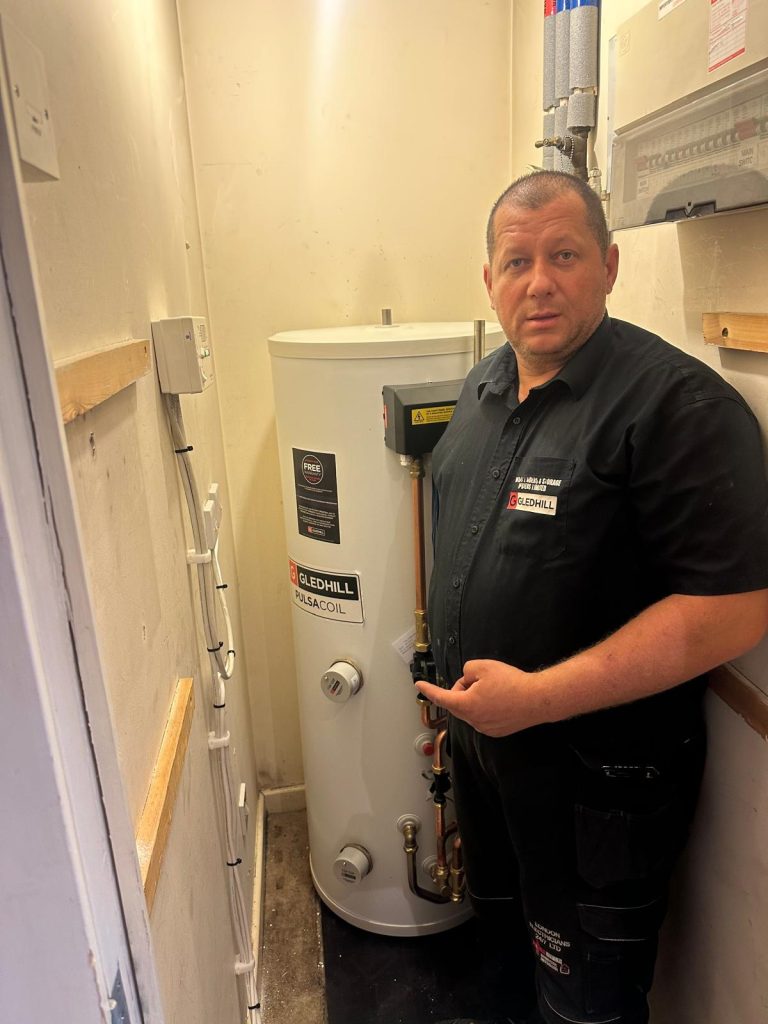
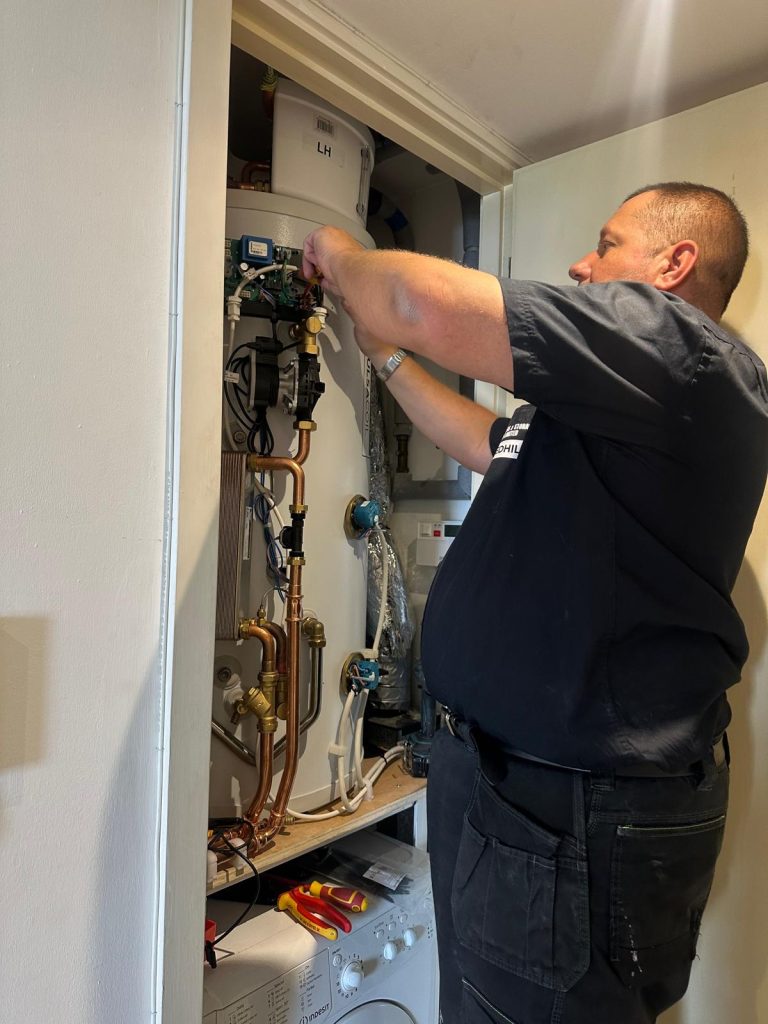
Arrange a PulsaCoil assessment in Elephant & Castle
Request an assessment for your PulsaCoil and provide the model and a concise description of the fault. Have the unit label and symptom notes ready when you contact a qualified engineer serving your postcode.
Ask whether the appointment is diagnostic or includes repair work. Request the estimate and terms before authorising any work, and allow the engineer to assess whether repair or replacement is appropriate.
An assessment can establish what is affecting your hot water, but it does not guarantee a repair on the day. Confirm the appointment scope and written charges before agreeing to the work.