
Cold taps or a sudden loss of hot water can disrupt everyday routines in a Finchley home. Finchley residents can contact the local service team to discuss a fault with a PulsaCoil unit and ask about an assessment. A local appointment may be available, but appointment availability depends on the service schedule.
Whether hot water has stopped altogether or become unreliable, getting the unit assessed can help identify the appropriate next step. Keep the model details and a clear description of what has changed in mind when you get in touch. This helps the team understand the issue you need assessed without assuming what has failed.
Hot-water disruption affects washing, cooking and the normal rhythm of a household. A practical first step is to arrange a discussion about the fault and the local service options. A fault needs to be assessed before the right work can be identified.
What to Expect from Pulsacoil Repair Finchley
A PulsaCoil fault is diagnosed by checking the symptoms against how the unit and its components are operating. A thermal store is an insulated vessel that holds heated primary water and transfers its heat through a heat exchanger to domestic hot water when required.
Symptoms help the engineer decide which parts of the system to assess, but they do not prove that a particular component has failed. The plate heat exchanger transfers heat between the stored primary water and the domestic hot water. The engineer may check relevant electrical and water-side components as part of the assessment.
Different changes in hot water or unit behaviour can point to different areas for inspection:
- No hot water may involve an immersion heater, thermostat or motorised valve.
- Water that is not hot enough may relate to partial heater failure, a thermostat setting or limescale.
- Visible leaking may come from the cylinder, pipe connections, valves or pressure-relief pipe.
- Electrical tripping may involve a cracked immersion heater element; banging, gurgling or rumbling may relate to limescale or air.
These are possible causes, not a home diagnosis. The same symptom can have more than one explanation, and more than one component may need checking. The engineer considers how the system behaves and tests relevant parts before proposing work.
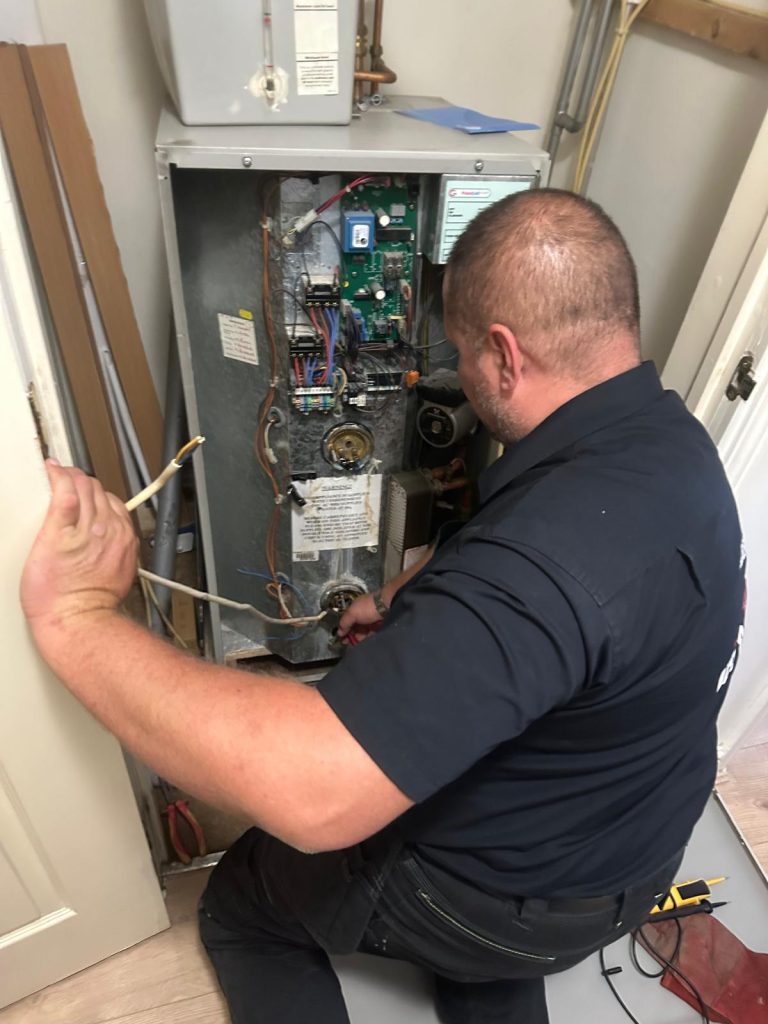
Do not open the unit or attempt electrical checks. A PulsaCoil combines electrical components with a water system, so inspection and testing should be left to a suitably competent engineer. Tell the service team what you have noticed, including whether the change is constant or comes and goes.
Testing can help separate a fault in a water-side component from an electrical problem. It also gives the engineer a basis for explaining any repair options and the work involved. A symptom can point towards a fault area, but testing is needed to identify the cause.
Pulsacoil Repair Prices and What Affects the Bill
Standard-rate PulsaCoil repair labour is £229.99 including VAT for the first hour. Each additional 15 minutes costs £57.50 including VAT, while parts and materials are charged at cost price plus 20%.
These are the standard-rate charges for a repair visit. The final amount depends on the diagnosed fault, the parts required and the labour needed to complete the agreed work. Standard-rate repair charges include a 12-month parts-and-labour guarantee on parts installed during the repair.
The main charge items are set out below. Parts are not a fixed fee because the items needed depend on the repair.
| Charge item | Amount | Condition |
|---|---|---|
| First hour | £229.99 including VAT | First hour of labour |
| Additional labour | £57.50 including VAT | Each additional 15 minutes |
| Parts and materials | Cost price plus 20% | Charged according to items required |
Before a repair visit, ask whether a call-out charge applies and whether it is separate from labour. A call-out charge can affect the total, so check how it appears in the estimate. Confirm whether the stated price covers assessment only or includes a particular repair.
Ask for the proposed work and its cost to be explained before you authorise it. If the assessment identifies a different fault from the one expected, the scope and total may change. Confirm the full price and agreed work before giving approval.
Repair or Replace a Leaking Cylinder?
A reported leak does not by itself show whether the cylinder or a connection has failed. A leak from a pipe connection or valve is different from a split leaking cylinder, so replacement is not automatic whenever water is found.
The engineer needs to identify where the water is escaping and assess the condition of the affected part. Repair options can include fixing an existing component, replacing a failed component or considering full-unit replacement. The appropriate work depends on the assessed fault and the condition of the unit.
These options involve different scopes of work and should be discussed in specific terms:
| Option | When it may apply | Work to discuss | What to confirm |
|---|---|---|---|
| Repair of an existing component | A component can be repaired | Repair scope and testing | Price and guarantee terms |
| Replacement of a failed component | A component cannot be repaired | Part required and fitting | Part cost and availability |
| Full-unit replacement | The unit is not practical to repair | New unit and installation | Capacity and total scope |
A leaking connection or valve may call for work on that part rather than the whole unit. A split leaking cylinder can make full-unit replacement a consideration because the leak may involve the cylinder itself. The engineer should explain the finding that supports the recommendation.
Do not treat the word “leak” as enough information to choose a repair. Ask where the water is coming from, what has been found and whether a component repair remains practical. Ask the engineer to explain why a full-unit replacement is more suitable than a component repair, if that is the recommendation.
Choosing a PulsaCoil Replacement for Your Home
The PulsaCoil Stainless and Advance ETS differ in capacity, water-delivery design, installation lead time and warranty. The PulsaCoil Stainless uses an electronic water-delivery system with a PCB board, plate heat exchanger, sensors, pump and flow switch. The Advance ETS uses a mechanical water-delivery system with a mechanical blending valve.
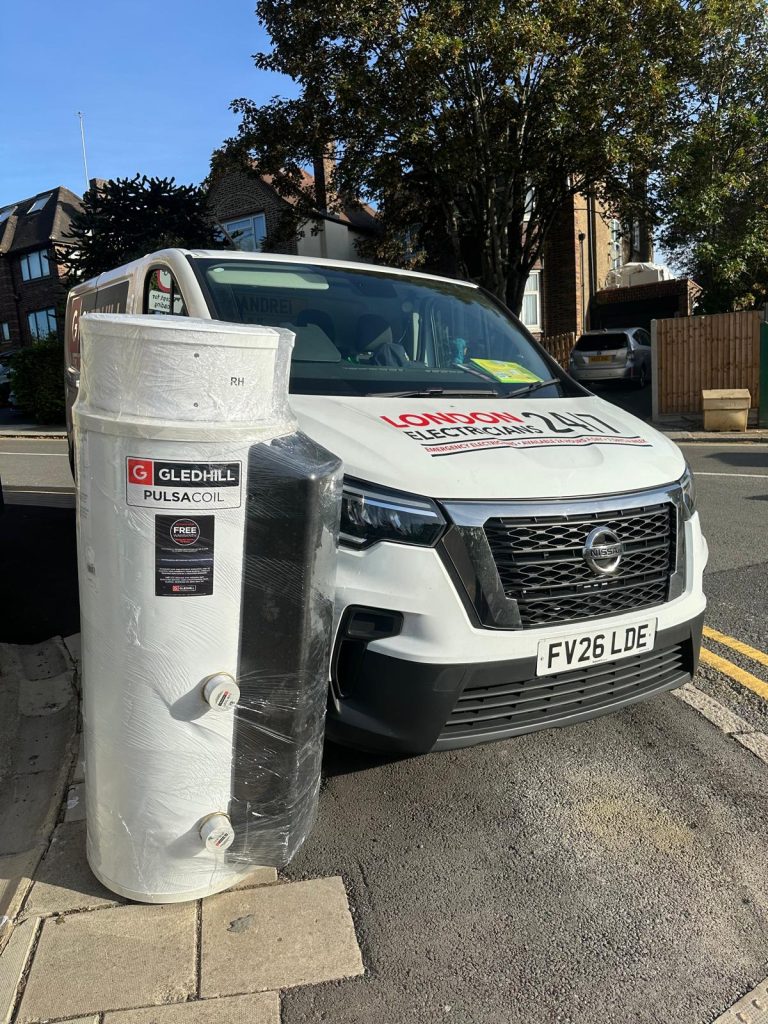
PulsaCoil Stainless is available in 150L, 180L and 210L capacities. Its listed installation lead time is 30 working days. The cylinder has a five-year sliding-scale warranty, dependent on manufacturing date, plus a one-year parts warranty and a one-year labour warranty.
Advance ETS is available in 160L and 210L capacities, with a listed installation lead time of 7-10 working days. It has a 10-year cylinder warranty, a two-year parts warranty and a one-year labour warranty. The electrical requirements also differ: PulsaCoil Stainless requires 3 x 20amp double-pole switches, while Advance ETS requires 2 x 20amp double-pole switches.
Capacity should reflect the number of residents and how they use hot water. A thermal store sizing guideline is 35-45 litres per resident, while a standard four-person household has a minimum recommended 200-litre hot-water tank. Daily use estimates offer another way to think about demand:
| Daily estimate per person | How to use the estimate |
|---|---|
| Low consumption: 20-30 litres | Consider alongside resident numbers and actual use |
| Average consumption: 30-50 litres | Consider alongside resident numbers and actual use |
| High consumption: 50-70 litres | Consider alongside resident numbers and actual use |
These daily estimates are per person, not a direct choice of store size. A shower is estimated at 18 litres per minute at 40°C, equivalent to 11 litres at 60°C. A bath is estimated at 100 litres at 40°C, equivalent to 60 litres at 60°C.
Frequent showers, baths and overlapping household routines can raise demand. Choosing a capacity without checking actual use risks a poor fit: a store may not meet peak demand, or may be larger than the household needs. The installer should calculate the final capacity against the household and property.
The two models also have different electrical requirements and delivery components, so the suitability of a replacement depends on more than the stated capacity. Ask the installer to verify the capacity against household use before ordering a replacement.
Can Discontinued PulsaCoil Models Still Be Repaired?
A discontinued PulsaCoil may still be serviceable, subject to the exact model, parts availability and appliance age. Models listed for support include PulsaCoil ECO, PCR, BP, A Class, 2000, 3 and One. The listed model range also includes PulsaCoil Stainless.
Discontinued parts can affect whether a repair is practical. A model may be recognised for support, but the exact product and the parts needed for its fault matter. Age can also affect the available repair options, so a model name alone does not confirm that a repair can be completed.
Give the engineer the model name or number if you can read it. The model label can help identify which parts and service requirements apply. The engineer can then assess the unit and discuss whether the required parts are available for the proposed work.
PulsaCoil A Class has a specific regulatory position: it is not covered by Building Regulations section G3 and is not notifiable to Building Control. Installation, maintenance and repairs to PulsaCoil A Class must be carried out by a suitably competent tradesperson. These statements apply to A Class, not to every PulsaCoil model.
Older units may still be suitable for servicing or repair, but their history and condition remain relevant to the assessment. Do not assume that a discontinued label means either that repair is impossible or that parts will be available. A Class requirements should be considered specifically when that is the model in your home.
If an engineer recommends replacement, ask how the model’s condition and parts affect the decision. Confirm the model and parts availability before agreeing to a repair scope.
What Happens During a Repair Visit?
A repair visit starts by confirming the reported fault and checking the parts relevant to it. The engineer discusses the proposed work before carrying it out, then checks operation after agreed work is complete.
Testing can show that the reported issue needs further assessment before a repair can be confirmed. The engineer should explain what the checks have found and what work is proposed. You can use that information to understand the scope before agreeing to it.
Annual servicing is recommended to help maintain reliability and identify developing faults. A service can include checks of electrical connections, sensors, controls, pressure, visible pipework and valves. These checks give the engineer a chance to note developing issues as well as the unit’s current condition.
Before the engineer arrives, prepare information that can help explain the problem and provide access:
- Model name or number, if known
- Symptoms and when they occur
- When the change began
- Any visible warning indicators
- Access information for the unit
Notes about when the system behaves differently can help distinguish a constant issue from one that appears only at certain times. Keep the model details and any notes about changing performance with the appliance paperwork.
Book Local PulsaCoil Support in Finchley
If your PulsaCoil has stopped supplying reliable hot water, request a local assessment to discuss the next step. Contact the service team to discuss appointment availability for Finchley and ask about repair support for your unit.
Share the model and a concise description of the problem, if known. The team can use those details to discuss the service required, but timing, parts availability and the repair outcome depend on the assessment and schedule.
Speaking to the service team is a practical way to begin addressing household disruption and regain confidence in the system. Contact the service team with your Finchley location and fault details to ask about an appointment.