
Losing hot water at home can disrupt washing, cooking and daily care. For households in Feltham, Pulsacoil Repair Feltham can help you arrange a diagnosis when the system stops supplying hot water.
A thermal store is an electric hot-water system that stores heated water for use when it is needed. Unlike a conventional boiler, it stores heat in water before delivering hot water around your home. A fault can affect everyday routines, including care needs in an assisted-living property.
The right response depends on the unit, the symptoms and the cause of the fault. A clear account of what has changed can help a repair provider assess the problem and explain the work required. You should have the diagnosis and proposed costs set out before deciding whether to approve a repair.
This page explains what to report, what a repair visit may involve and how to compare repair or replacement choices. It also sets out practical points to check when choosing a repair provider in Feltham. A clear diagnosis is the starting point for choosing a suitable repair.
Book Pulsacoil Repair Feltham for a Diagnosis
A Feltham repair enquiry is more useful when it identifies the PulsaCoil model and the hot-water problem. If you know the model, include it when you contact a repair provider, alongside a clear description of the fault.
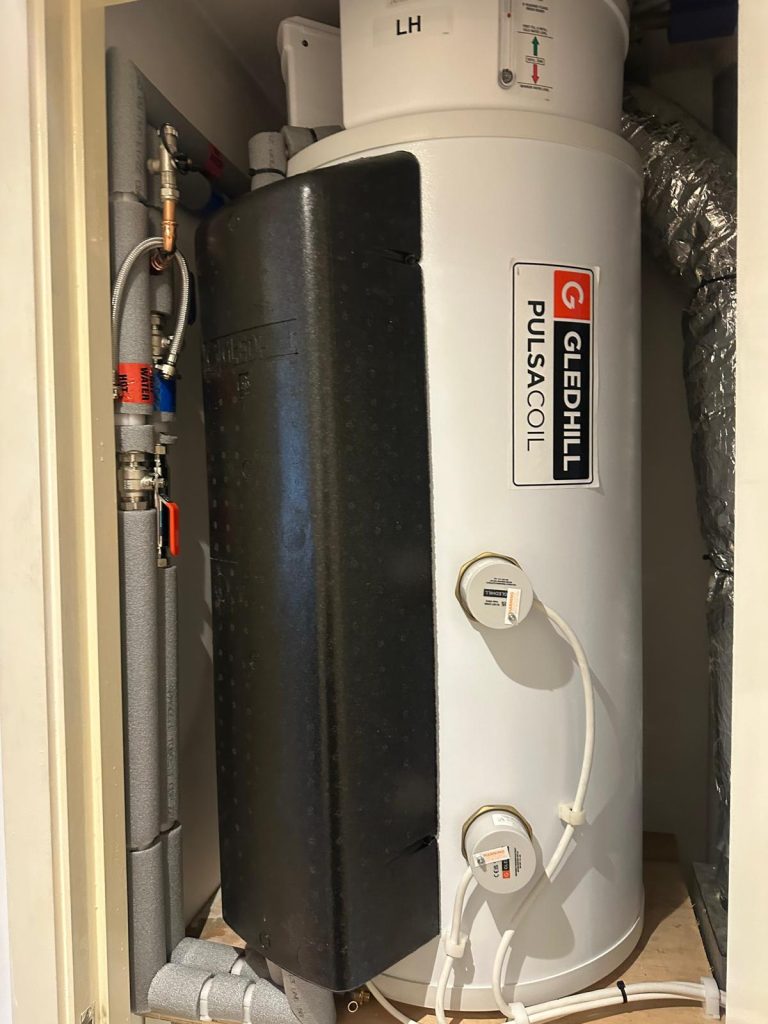
A Gledhill PulsaCoil repair in Feltham should start with those details. The range includes PulsaCoil 2000, A Class, BP, Eco and 3 models. The models have different designs, so one model’s fault does not prove another has the same problem.
A PulsaCoil is an electric thermal store, not a conventional boiler. A repair provider familiar with electric thermal stores is better placed to consider the right diagnosis than someone treating the unit as a standard boiler. This distinction matters when discussing a pulsacoil repair or arranging a repair visit.
When you describe the issue, say whether hot water stopped suddenly or became unreliable over time. Include any changes you noticed before the fault, such as a display warning or a recent interruption to supply. This information helps frame the assessment without deciding the cause in advance.
If you have paperwork for the unit, its model name may appear on a label or service record. A day repair visit can then be considered with a clearer idea of which system is in the home. Do not guess if the label is hard to reach or unreadable.
A model-specific assessment avoids treating an electric thermal store like a conventional boiler.
Safe checks for hot-water loss, warning lights and leaks
No or erratic hot water on an A Class can have several causes, so a symptom alone cannot identify the failed part. You can record what you see safely, but leave internal checks and repairs to a service engineer.
- Record whether hot water is completely absent or intermittent.
- Note any display warning, unusual noise or change in running hot water.
- Check accessible double pole switches only if it is safe to do so.
- Look at an indicator sight glass only if visible without opening the unit.
On an A Class, low water in the thermal store, a failed immersion heater element or thermostat, a water delivery system fault, or an external Economy 7 time-clock failure can cause no or erratic hot water. These are possible causes, not a diagnosis. The feed expansion tank and level indicator sight glass may help an engineer assess the system, but do not open the casing to inspect them.
A red fault light or missing green light indicates overheating on an A Class. A service engineer must reset the system; do not try to reset the light yourself. Record which light is showing and tell the repair provider.
An A Class leak may come from an immersion heater, external pipework or fittings, or the cylinder. A leak does not always mean the cylinder has failed, though a leaking cylinder can be beyond economical repair. Do not touch wet electrical equipment or try to stop a leak by opening the unit. Keep people away from any wet area around electrical equipment.
What happens during a PulsaCoil repair visit?
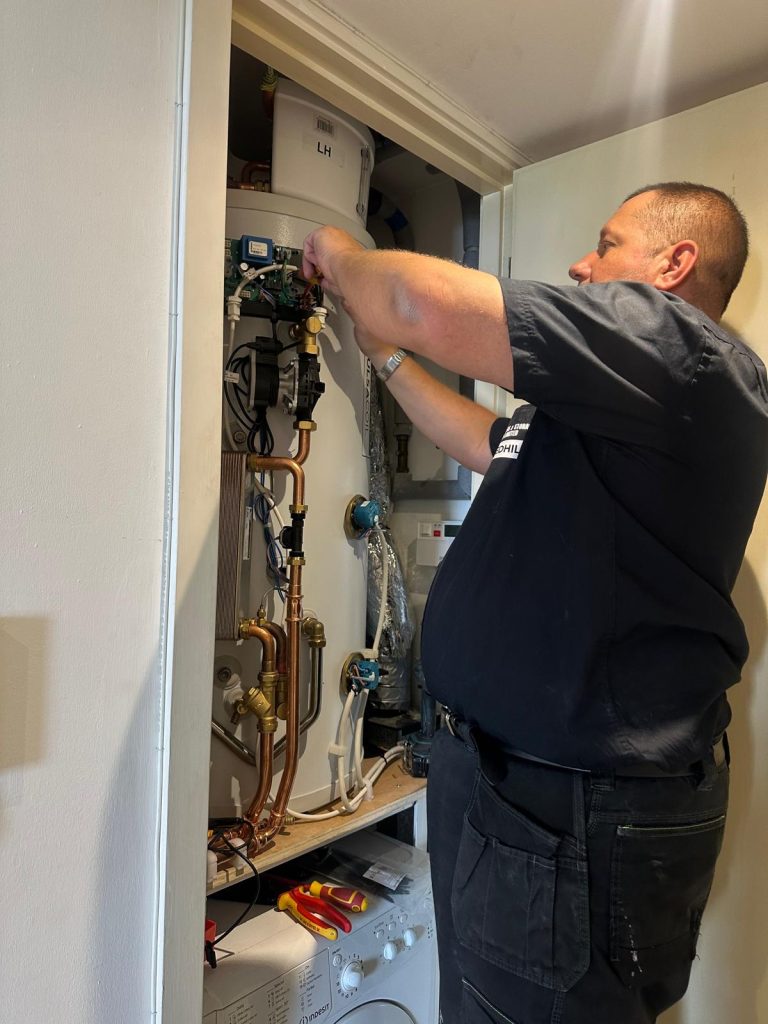
A PulsaCoil repair visit begins with diagnosis, not an assumption about which component has failed. The engineer inspects the unit, identifies the fault and explains the proposed work before you authorise it.
- Share the model name and the symptoms you recorded.
- Allow the engineer to inspect the unit and diagnose the fault.
- Review the proposed work and cost breakdown before authorising it.
- Ask what tests the engineer will complete after the repair.
A Feltham A Class repair at Berberis House, TW13 involved testing, replacing sensors, refilling and retesting. The actual work depends on the diagnosis. A PulsaCoil Stainless water delivery system includes a PCB board, plate heat exchanger, sensors, pump and flow switch.
A PulsaCoil repair commonly takes 1-3 hours, depending on the fault. That is a typical duration, not a promise that your repair will finish within that time. A first visit fix depends on the fault and whether the required pulsacoil spare parts are available. A repair first visit cannot be guaranteed for every model or fault.
Ask whether the proposed parts are genuine pulsacoil parts and what warranty applies to the work. Parts supplied by Supplied Direct have a 12-month parts warranty, with UK delivery available. Those terms apply to parts supplied by that company, not automatically to parts installed by every repair provider.
Keep the engineer’s diagnosis and any changed parts in your service record.
How to assess a repair provider and local reviews
Reviews of PulsaCoil repairs in Feltham are more useful when they describe the fault and the work, not just the final rating. A review naming Feltham and a specific PulsaCoil model gives you more context than an undetailed star rating.
Look for details about the model, the reported fault, the diagnosis, the work completed and any warranty follow-up. A high rating or one testimonial cannot establish what will happen with another unit. Repair outcomes depend on the fault and the repair required.
PulsaCoil Group is a named repair provider you can consider. Ask any repair provider who will attend, what experience they have with PulsaCoil systems, and whether you will receive a written quote before work begins. Ask for the warranty terms in writing, including what they cover and for how long.
If you live in assisted living, check whether the provider can meet your access arrangements. For a live assisted living setting, clarify who can let the engineer in and whether access needs advance planning. Do not assume your address or age qualifies you for a plan.
Terms such as living protect plus, assisted living protect and maintenance support repairs may refer to specific products or cover. Check the eligibility rules and exact contract terms directly before relying on support repairs included. Compare the repair options by their written terms, not their names alone.
Treat a specific, documented answer as stronger evidence than a broad promise of a first-visit fix.
Compare PulsaCoil repair options and costs
The standard-rate option charges for the first hour of labour, while fixed-price and monthly options use different payment terms. The 2026 charges below show what each option includes and the conditions attached.
| Option | Charge | Included | Important condition |
|---|---|---|---|
| Standard-rate repair | £229.99 first hour; £57.50 per additional 15 minutes | Labour; parts and materials at cost plus 20% | Prices include VAT; first-hour charge is not the total repair price |
| Fixed-price repair | £399.99 | Repair; 12-month parts and labour warranty | If repair is impossible, credit or refund terms apply |
| Repair & Care | £64.95 per month | Repairs, parts, labour and ongoing maintenance | No call-out, excess or labour fees |
| Assisted Living Repair & Care | £29.95 per month | Repair & Care support for eligible people | 12-month contract; eligibility applies |
| Assisted Living Protect Plus | £10.95 per month | Assisted-living protection for eligible people | 12-month contract; eligibility applies |
In 2026, standard-rate labour is £229.99 including VAT for the first hour, then £57.50 including VAT per extra 15 minutes. Parts and materials cost their purchase price plus 20%. A longer repair and required parts can raise the final bill beyond the first-hour charge.
The £399.99 fixed-price repair includes a 12-month parts and labour warranty. If repair is impossible because of a split or leaking cylinder or discontinued parts, £399.99 is credited towards replacement or refunded minus a £229.99 attendance fee, subject to terms and conditions.
Repair & Care costs £64.95 monthly in 2026. The assisted-living plans cost £29.95 and £10.95 monthly, respectively. Both require eligibility for people over 55 living in assisted-living properties and have 12-month contract terms. Compare the full contract commitment with the repair you need, not only the monthly charge.
When repair is not possible, compare replacement options
A split or leaking cylinder, or discontinued parts, can make repair impossible, but a failed component alone does not mean replacement is necessary. Ask the installer to confirm whether the cylinder or a replaceable part has failed before considering a new unit.
| Feature | PulsaCoil Stainless | Advance ETS |
|---|---|---|
| Capacity and order-to-installation time | 150, 180 or 210 litres; 30 working days | 160 or 210 litres; 7-10 working days |
| Feed and expansion tank and filling method | External feed expansion tank; manual jug filling | Internal feed expansion tank; built-in filling loop |
| Sight glass and water-delivery type | Small level indicator sight glass; three 20-amp double pole switches | Large level indicator sight glass; mechanical blending valve; two 20-amp double pole switches |
| Cylinder, parts and labour warranties | 5-year sliding-scale cylinder; 1-year parts; 1-year labour | 10-year cylinder; 2-year parts; 1-year labour |
Daily use affects the size you need. Typical guidance is 20-30 litres per person for low use, 30-50 litres for average use and 50-70 litres for high use. Showers use about 18 litres per minute at 40 degrees Celsius, equal to 11 litres at 60 degrees Celsius. A bath uses about 100 litres at 40 degrees Celsius, equal to 60 litres at 60 degrees Celsius.
A sizing guide allows 35-45 litres per resident, with a minimum 200-litre tank for a standard four-person household. These figures are guides, not a substitute for installer calculations. An undersized store can cause insufficient hot water, overwork, warranty invalidation and Building Regulations non-compliance.
PulsaCoil ECO had a sliding-scale five-year warranty, but no longer has manufacturer warranty cover. The Stainless cylinder warranty depends on its manufacturing date. Ask an installer to assess the existing layout and confirm a suitable cylinder size before agreeing to replacement.
Check the engineer and repair terms before agreeing
A clear diagnosis and itemised terms make it easier to judge whether a proposed repair is suitable. The written work should match the fault the engineer has identified, rather than rely on a general description of the problem.
Ask the repair provider to explain which parts are needed and why. The quote should identify labour, parts and the warranty that applies to the proposed work. If the engineer changes the diagnosis or recommends extra work, ask for the revised cost and terms before approving it.
A Feltham review is most useful when it names the model, fault and completed work. Your engineer’s diagnosis and written terms relate to the repair proposed for your unit, so use them to assess whether the work makes sense. A broad promise cannot replace details about the fault or the parts required.
For assisted-living residents, confirm eligibility and the scope of maintenance support repairs against the exact contract. Living in an assisted living property, or being over a certain age, does not alone prove that you are covered. Check whether the living protect plus or assisted living protect terms apply to your circumstances.
Do not assume that support repairs included in one contract also apply to another. A general promise of a first-visit fix cannot guarantee that a required part will be available for your model. Ask how the provider will handle the repair if a part needs to be ordered.
Do not authorise work until the written terms match the repair you have agreed to.
Arrange a PulsaCoil repair visit in Feltham
Same-day or next-working-day attendance may be available, subject to the confirmed appointment slot. Standard-rate repair appointments are listed for the same day or next working day, depending on availability.
Before you book, prepare the details the repair provider needs to understand the request. You can give this information when you call or use the online booking process.
- The model name, if you know it.
- The symptoms and any display code.
- Your address and access arrangements.
- Whether parts availability and a return visit have been discussed.
Ask the provider to confirm the appointment slot rather than assume a next working day visit is available. Clarify the written cost basis before agreeing to work. A confirmed visit is for assessment; it does not guarantee a first-visit repair or that a required part will be in stock.
If you need to book standard rate, ask how the first-hour charge, extra labour and parts will be handled. Make sure you understand the cost basis before the engineer starts work. This gives you a clear point to refer to if the diagnosis changes the proposed repair.
Call 0330 229 4190 or book online to request a Feltham repair visit.