
A PulsaCoil fault in Edgware calls for a system-specific assessment because a thermal store works differently from a conventional boiler. A thermal store is a vessel that holds heated water so its stored heat can provide domestic hot water, often at mains pressure.
This hot water system can supply hot water using stored heat without a conventional boiler. Flats, apartments and houses may have different installations, so the right repair depends on the system fitted in your property. A system-specific assessment can identify the fault and whether repair is appropriate.
If your hot water has become unreliable, an assessment can help establish what needs attention before you agree to work. It also gives you a basis for considering the proposed repair against the condition of the system. The same symptom can have different causes, so a quick assumption may lead to unsuitable work.
Base the repair decision on the fault found and the work quoted, not on a symptom alone.
Pulsacoil Repair Edgware: What the Service Involves
A specialist repair visit starts by identifying the system and checking the fault before any repair is authorised. A repair service should explain its findings and recommended work in terms you can assess.
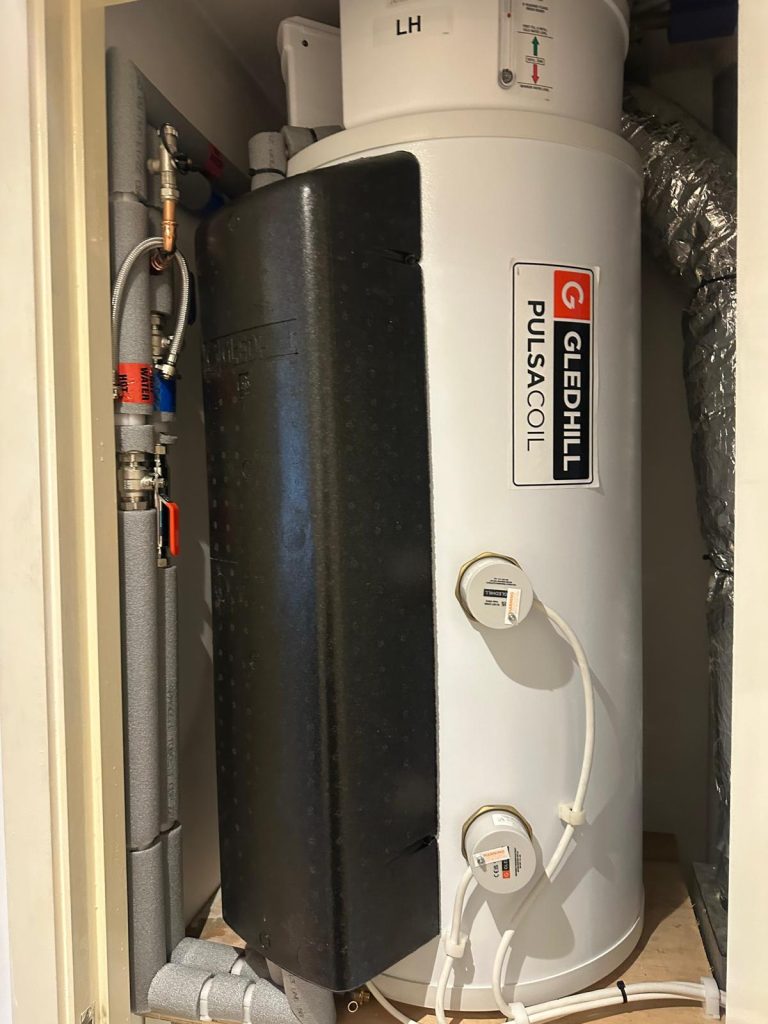
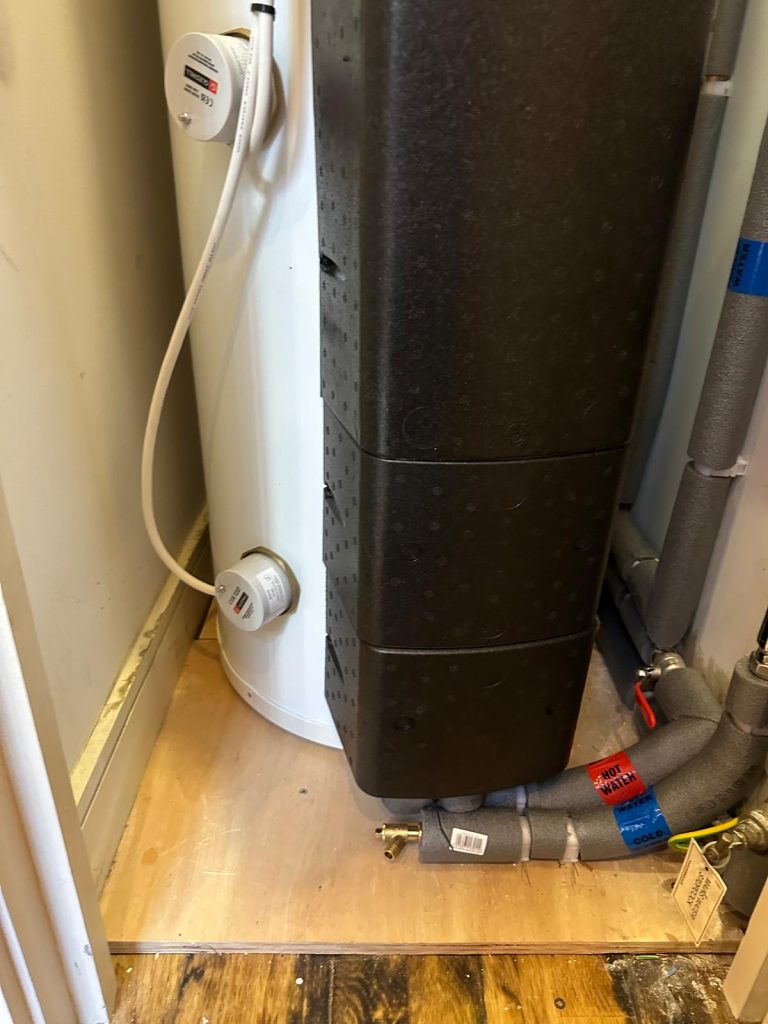
A Gledhill PulsaCoil repair in Edgware may involve electrical and water-system components because a thermal store is not a conventional boiler. Models include PulsaCoil 2000, A Class, BP, Eco, 3 and 3D. These names identify examples of pulsacoil systems, not a ranking of performance.
The usual service sequence is straightforward, though the work depends on what the inspection finds. Similar problems can have different causes, so a symptom alone does not identify a failed part. PulsaCoil repair in London may cover Edgware, but postcode coverage and appointment options need confirmation.
- Identify the model and inspect the installation.
- Diagnose the reported fault and explain the findings.
- Set out the recommended repair and obtain your agreement.
- Carry out suitable work and test the system afterwards.
Ask whether the proposed repair includes testing and commissioning, and what those checks involve. This helps you understand what the agreed service covers, rather than relying on a broad description of repair. The scope should distinguish the inspection from any further work that may be recommended.
Ask what testing and commissioning are included before agreeing to the work.
Which PulsaCoil Symptoms Need Prompt Attention?
A leak near electrical parts or repeated electrical trips needs prompt attention rather than a wait-and-see approach. These signs call for a professional assessment, but they do not prove which part has failed.
Check what has changed and report the details clearly. Five useful warning signs are:
- No hot water at the taps.
- Unexpected changes in water temperature.
- An electrical trip when the system runs.
- A visible leak around the unit or nearby pipework.
- An error signal or unusual noise.
Hot water problems can come from different faults, and the same sign may have more than one explanation. Electrical issues deserve care, particularly if a trip happens repeatedly. A visible leak also needs prompt attention because water can reach electrical parts or damage nearby areas.
On a PulsaCoil 2000, the 92°C overheat thermostat operates when the store reaches that temperature. This detail applies to that model, not every PulsaCoil system. Do not treat an error signal, temperature change or noise as proof of a specific fault.
If water is near electrical components, stop using the system and isolate power only if you can do so safely.
How Does a Specialist Diagnose a PulsaCoil Fault?
A reliable diagnosis tests how the system behaves instead of treating one symptom as proof of a failed part. A PulsaCoil repair technician can compare readings with the model’s expected operation.
For a PulsaCoil 2000, useful reference points include its two immersion heaters and the hot-water flow and outlet temperature. The figures below apply under the stated conditions.
| Part or reading | What the engineer checks | PulsaCoil 2000 reference detail |
|---|---|---|
| Off-peak immersion heater | Operation and heating response | 3 kW |
| On-peak boost immersion heater | Boost operation and heating response | 3 kW |
| Domestic hot-water flow | Flow under normal pressure and adequate supply | Maximum 28 litres per minute |
| Outlet temperature | Temperature at a measured flow rate | About 55°C at 18 litres per minute |
Further checks may cover thermostats or sensors, boards or relays, pumps or valves, and possible limescale restrictions. These parts can affect how a hot water system operates, but symptoms alone do not show which one has failed.
The PulsaCoil 2000 has a 100 mm-high installation base. Its standard Economy 7 model-selection guide lists PC145, PC185, PC215 and PC235. These are identification or installation details, not evidence of a fault. Replacing an immersion element requires the system to be fully drained.
Treat a flow reading as a clue to investigate, not proof that a pump has failed.
What Affects PulsaCoil Repair Costs?
A repair quote should distinguish the diagnostic work, labour and parts rather than rely on the model name alone. PulsaCoil repair prices in Edgware depend on the diagnosed fault and the labour and parts required.
The standard-rate repair is charged by time and parts. It is different from a published fixed-price repair, and both differ from an estimate for one A-Class component. The figures below include VAT where stated.
| Repair option | Price or estimate | What the figure covers |
|---|---|---|
| Standard repair | £229.99 first hour, then £57.50 per following 15 minutes | Labour; parts and materials at cost plus 20% |
| Fixed-price repair | £399 including VAT | Published fixed-price repair |
| A-Class immersion-element replacement | £200-£500 | Estimate depends on the fault |
The standard repair rate gives a time-based charge, with parts and materials added at cost plus 20%. The PulsaCoil Group fixed-price repair was listed at £399 including VAT from November 2025. These are different charging approaches, so check which applies to the work offered.
An A-Class immersion-element replacement is estimated at £200-£500, depending on the fault. Common A-Class repairs can take 1-2 hours when parts are available, but that is not a promised appointment duration. Ask whether diagnosis, labour and parts are included, and approve extra work before it begins.
Get approval for any extra work or return visit before additional charges are incurred.
How to Arrange a Gledhill PulsaCoil Engineer in Edgware
A clear model and symptom description helps an engineer understand what to prepare for an Edgware visit. Edgware is in north-west London, but coverage and appointment availability depend on the address and service.
Gledhill PulsaCoil repair in London may include Greater London areas, but confirm coverage for your Edgware address and the appointment options. Give the service enough detail to understand the reported fault without opening the casing.
- Read the model label, if accessible without opening the casing.
- Describe what happens and when it began.
- Note any display code.
- Explain access or parking constraints.
- Confirm visit arrangements and diagnostic terms.
When comparing Gledhill PulsaCoil repair reviews in London, look for details about diagnosis, communication and follow-up. A rating alone gives little information about how a repair was assessed, and reviews cannot guarantee the same result for your system.
A PulsaCoil engineer near you may use the first visit for assessment if parts or further checks are needed. Ask what the first visit includes and whether the issues first visit can resolve are limited by parts availability or the need for more testing. A clear booking helps set expectations, but it cannot establish the fault in advance.
Confirm the diagnostic charge and expected visit duration before accepting the appointment.
When Is a PulsaCoil 2000 Replacement Worth Considering?
Compare a repair quote with replacement when faults recur or the required repair is impractical. Age alone does not decide whether a replacement is right for your property; the fault, repair scope and installation needs matter.
An immersion element may last approximately 7-10 years, depending on use and water hardness. That estimate concerns the element, not the whole unit. Some original PulsaCoil units are approaching 20 years old and may be nearing the end of their expected lifespan.
| Replacement system | Available capacities | Supply-and-install price and warranty |
|---|---|---|
| PulsaCoil Stainless | 150, 180 and 210 litres | From £2,695; 5-year sliding-scale cylinder warranty and 1-year parts warranty |
| Advance ECO ETS | 160 and 210 litres | From £2,745; 10-year cylinder guarantee and 2-year fitted-component guarantee |
The prices have no specified year in their terms, so treat them as guide figures rather than a guaranteed current quote. PulsaCoil Stainless cylinder cover depends on the manufacturing date. Sizing and compatibility depend on the home and installation requirements.
For PulsaCoil 2000 installation, a competent person must carry out the work in line with relevant regulations and British Standards, including BS 6700 and BS 7671. The manual states that this appliance is not covered by Building Regulations section G3 and is not notifiable to Building Control. That position applies to the PulsaCoil 2000 manual and should not be assumed for other systems.
Before authorising removal, confirm access dimensions, disposal, compatibility and commissioning in the written scope.
What Does Gledhill PulsaCoil Service Include?
A planned service can check the feed-tank level, water quality and any maintenance the system actually needs. The PulsaCoil 2000 manual includes an annual servicing section, and a qualified technician check at least once a year is a useful rule of thumb.
A service should reflect the condition of the particular system, rather than apply the same care to every installation. Ask what the visit covers and whether any recommended work is separate from the inspection.
- Inspect the system and check the feed-tank water level.
- Assess water quality.
- Consider cleaning or descaling if inspection supports it.
Limescale can restrict flow, but it is not the cause of every problem. Cleaning or descaling should follow an assessment, rather than being assumed necessary for every hot water system. Model-specific manufacturer guidance should guide routine care.
Arrange an assessment sooner if a fault or leak develops instead of waiting for the next planned service. Clear advice can help you understand whether the issue needs repair, maintenance or further checks. Keep the system’s model details available when discussing support.
Keep the service record and written advice with the system details for future visits.
Arrange a Clear Next Step for Your Hot Water
A suitable next step is to request an assessment and ask what the visit and any recommended work will cost. A clear description of the fault, followed by written agreement on the proposed work, helps you make an informed booking.
Contact a local PulsaCoil repair service to request an assessment and available appointment options. Explain what has changed and ask how the service will set out its findings before you agree to repair. This gives you a practical basis for deciding how to restore dependable hot water in your home.
Have the model details and a brief description of the symptoms ready when you contact a service.