
If your Gledhill Pulsacoil A-Class is not providing hot water as expected, arrange an assessment rather than guessing at the cause. A thermal store is a system that stores heat in water for later use to provide hot water. The A-Class heats water using an immersion heater.
A loss of hot water can disrupt washing, cooking and everyday routines. The same symptom can have more than one cause, so it does not confirm which part has failed. An assessment can establish whether a repair is suitable and what work may be needed.
A repair service can consider the unit’s condition and the change in performance before recommending work. This gives you a clearer basis for deciding what to do, without assuming that every fault needs the same fix. Note the model name and the change in hot water performance before contacting a repair service.
What symptoms mean your Pulsacoil A-Class needs attention?
A sudden loss of hot water, a leak or an unfamiliar noise is a reason to arrange an assessment, not proof of one particular failed part. These signs can help describe what has changed, but they do not identify the fault on their own. Treat them as clues rather than a diagnosis.
No hot water or lukewarm water may point to an immersion-element or thermostat fault. A visible leak may come from the tank or connected pipework. An unusual noise or error code may relate to hardware or a control fault in the system.
| Symptom | Possible indication | Practical next step |
|---|---|---|
| No or lukewarm hot water | Possible immersion-element or thermostat fault | Record when performance changes and request an assessment |
| Visible leak | Possible tank or connected-pipework leak | Seek prompt professional attention |
| Unusual noise or error code | Possible hardware or control fault | Record the sound or code and when it appears |
These are possibilities, not diagnoses. A qualified heating engineer needs to assess the thermal store before deciding what has failed. Describe whether the problem began suddenly or developed over time, as that detail may help explain the fault.
An intermittent fault is useful to describe, even if the hot water returns before an appointment. Note when it happens, how long it lasts and whether anything else changes. A visible leak warrants prompt attention even if some hot water remains.
Keep the area around the unit clear for an assessment, and do not remove covers or test electrical parts. If a leak is active, explain that when seeking help so the repair service understands the urgency. Record any displayed error code exactly as it appears before arranging help.
How is a Pulsacoil A-Class fault diagnosed?
Diagnosis starts by matching the reported hot water problem to the A-Class components and checking likely causes in a safe, systematic order. A qualified heating engineer will ask what changed and inspect the relevant parts before proposing a repair. The assessment should connect test results to the work recommended.
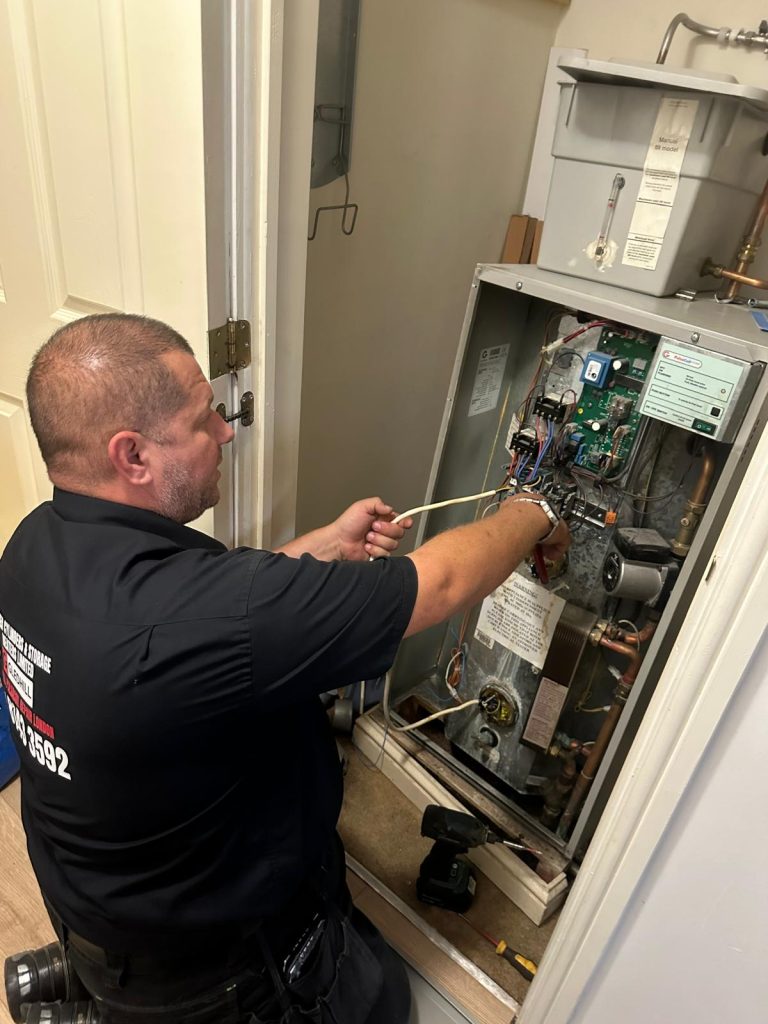
The A-Class has two immersion elements, each with its own thermostat. A relay controls the power supply to both elements. These parts can be checked as possible causes, alongside the pump speed control and sensors involved in water delivery.
- Ask what changed and when the hot water problem began.
- Inspect the unit and relevant connections.
- Test likely causes, including both immersion elements, their thermostats and the relay.
- Explain the proposed work and check operation after agreed repairs.
The pump speed control and sensors may also be involved in the system’s operation. A working pump alone does not establish the cause of a hot water fault. The engineer should consider how the parts work together rather than treating one visible sign as conclusive.
The time needed to diagnose or complete a repair depends on access, the fault and whether suitable parts are available. Work may not be finished during the first visit if the unit is difficult to access or a required part needs to be sourced. Ask what can be completed that day.
Before work begins, the proposed repair should be clear to you, including which part or connection it addresses. After agreed repairs, the engineer should check that the system operates as expected. Ask the engineer to explain the test result that supports the proposed repair before authorising it.
Which parts and model details matter for a Pulsacoil repair?
A clear model name helps an engineer distinguish the parts and water-delivery arrangement fitted to the unit. Different Gledhill models use different designs, so a component that suits one model cannot be assumed to fit another. Accurate identification matters when discussing spare parts.
The comparison below describes the PulsaCoil Stainless and Advance ETS model families, not the A-Class. Their water delivery system, sizes and feed expansion tank arrangements differ. Those differences affect part identification, including whether a plate heat exchanger or a mechanical blending valve is involved.
| Detail | PulsaCoil Stainless | Advance ETS |
|---|---|---|
| Water-delivery system | Electronic system with PCB, plate heat exchanger, sensors, pump and flow switch | Mechanical blending valve |
| Available sizes | 150L, 180L and 210L | 160L and 210L |
| Feed and expansion arrangement | External feed and expansion tank | Internal feed and expansion tank |
On a Stainless model, the electronic controls work with a plate heat exchanger to deliver water. The heat exchanger is part of that model’s design, not a general spare part for every Pulsacoil. Its plate heat arrangement should not be confused with the mechanical blending valve used by Advance ETS.
The expansion tank position also varies between these model families. A Stainless has an external feed and expansion tank, while Advance ETS has an internal tank. Knowing this can help the engineer understand the unit’s layout, but it does not identify the correct parts for an A-Class.
Provide the model name from the unit’s label, or share a label photo taken without opening the case. Include the full model wording if it is visible, since similar names can refer to different designs. Confirm the model from its label before agreeing to a part order.
Should you repair or replace a Pulsacoil A-Class?
A discontinued A-Class may still be repairable, but the cylinder’s condition, the fault and the required part determine the suitable option. Discontinued status alone does not mean the whole unit must be replaced. A component repair may remain practical if the cylinder is sound and the needed part can be obtained.
The PulsaCoil A-Class is discontinued, and the PulsaCoil BP is the only model still in production. The PulsaCoil 111 and 2000 are also discontinued models. Spare parts remain available for discontinued PulsaCoil models, but that does not guarantee a specific part is available for your repair.
A failed component can sometimes be repaired without replacing the cylinder. The engineer should consider the fault and the condition of the store before recommending that route. The age of the model by itself does not establish whether a component repair will work.
A leaking or irreparable cylinder is different from a fault in a serviceable component. If the cylinder cannot safely continue in use, replacement may need consideration. Ask what condition the engineer found and how it affects the repair options.
If replacement is recommended, ask for the reason and whether a component repair remains practical. A clear explanation should identify the issue with the cylinder or the part and why the proposed work addresses it. This helps you compare the recommended scope with the alternative, rather than relying on the model’s discontinued status alone.
Spare-parts availability can change the practical choices, but it is not a promise that every repair can be completed. Ask which part is needed and whether it is suitable for your exact model. Get the repair-versus-replacement recommendation and its reason in writing before approving the work.
How to arrange Pulsacoil Repair Edmonton
Choose a qualified heating engineer who can discuss the A-Class model and the work your reported fault may require. Ask about experience with the exact Gledhill Pulsacoil A-Class, and confirm the engineer is qualified for the electrical and plumbing work involved.
When contacting a repair service, describe the model, the hot water change and any error code or leak. An Economy Seven supply can be connected to the A-Class, so say whether off-peak heating, booster heating or both are affected. That information helps the engineer understand which supply is involved.
Before you book, ask the provider to explain the proposed service and what the appointment covers. Confirm the written scope, call-out charges, parts and labour warranty, and terms for any return visit. Ask directly about insurance and whether it covers the work being discussed.
The Emonton service area and appointment availability must be confirmed with the provider. Do not assume that a repair service covers your address or can attend at a particular time. Share your location early in the enquiry to establish whether an appointment is possible.
Clear information can make the first discussion more useful. If you do not know whether the off-peak or booster supply is affected, say so rather than guessing. The engineer can take that uncertainty into account when considering the system.
Before confirming an appointment, make sure you understand the visit terms and what happens if additional work is needed. Confirm the call-out and return-visit terms before agreeing to an appointment.
What affects Pulsacoil repair costs and booking?
A Pulsacoil repair quote is shaped by the fault, required parts, labour time, access and the provider’s charging structure. The price should explain what the proposed repair covers, rather than giving you an unclear total. Ask for the pricing in writing before authorising work.
A useful quote should clarify diagnosis, labour, parts, call-out charges, VAT, return visits and exclusions. If the engineer finds that additional work is needed, request an updated scope and price before authorising it. This gives you a chance to understand any change in costs.
- Exact model name or a photo of the label.
- Symptoms and when they began.
- Any leak or change in water supply.
- Access details for the unit.
- Preferred contact method and availability.
Use the booking details to describe the fault clearly, including when it started and what has changed. Mention access limits that could affect the engineer’s work, such as a restricted cupboard or narrow route. This can help the provider plan the visit and allow suitable time.
A component-repair quote may not cover an irreparable cylinder or its replacement. Cylinder replacement is separate from a component repair and should have its own explained scope. Ask which work is included and which parts or labour would be charged separately.
Do not treat an initial estimate as approval for extra work. The agreed price and scope should reflect the repair you have authorised, with any changes explained first. Ask for the agreed work and any exclusions in writing before authorising the repair.
Book a safe Pulsacoil assessment
A clear model name and concise fault description give a repair provider a useful starting point for an assessment. Contact a suitable local provider, share what has changed and ask what the proposed appointment will cover.
Confirm the visit scope and terms before you agree to book. An assessment can help establish the cause and whether a repair is suitable, but it cannot guarantee a particular fix before inspection. Request an assessment and confirm the agreed visit terms before booking.