
A cold or inconsistent hot-water supply can quickly disrupt a household routine. If you need Pulsacoil Repair Erith, a tap running cold or warm may leave you unsure what to do next. An assessment is the practical first step towards finding out what needs attention.
A thermal store is a vessel that holds heated water so it can be used later. The PulsaCoil system stores heated water for later use and is not a conventional boiler. This difference matters because its operation and repair needs are not the same as those of a boiler.
A qualified PulsaCoil engineer can assess the system and identify what needs attention, though an initial description cannot confirm the cause. You can help by explaining when the supply changed and whether the problem happens all the time. A clear description of the problem gives an engineer a useful starting point for assessing the system.
Which PulsaCoil Faults Need Attention?
A PulsaCoil can remain switched on while delivering water that is cold, lukewarm or less plentiful than usual. Common problems include loss of hot water, leaks, electrical tripping, warning lights and changes in the way the system heats or runs.
These symptoms can have different causes, so a single sign does not identify the failed part. Use the details in this table to describe what you have noticed when arranging an assessment. The common PulsaCoil symptoms can affect water delivery or how the system operates.
| Symptom | What you may notice | Useful detail to record |
|---|---|---|
| No hot or lukewarm water | Taps or showers stay cold or warm | Whether it affects all outlets |
| Tripping or Economy 7 not heating | Power cuts out or overnight heat is absent | When it happens |
| Leak | Wet patch near cylinder or pipework | Where the water appears |
| Flashing lights, unusual noise or reduced output | Warning or change in operation | Whether the symptom is constant or intermittent |
The table helps describe symptoms, not diagnose a component. Reduced hot-water output may be more noticeable when several taps or showers are used. A leak also needs prompt attention because water near electrical parts can create an additional safety concern.
Record whether an issue affects every outlet or only one, and whether it follows a particular time or use pattern. Repeated tripping is not a reason to keep resetting the circuit. Note whether each symptom is constant or comes and goes, as that pattern can help describe the fault.
Pulsacoil Repair Erith: What Does Diagnosis Involve?
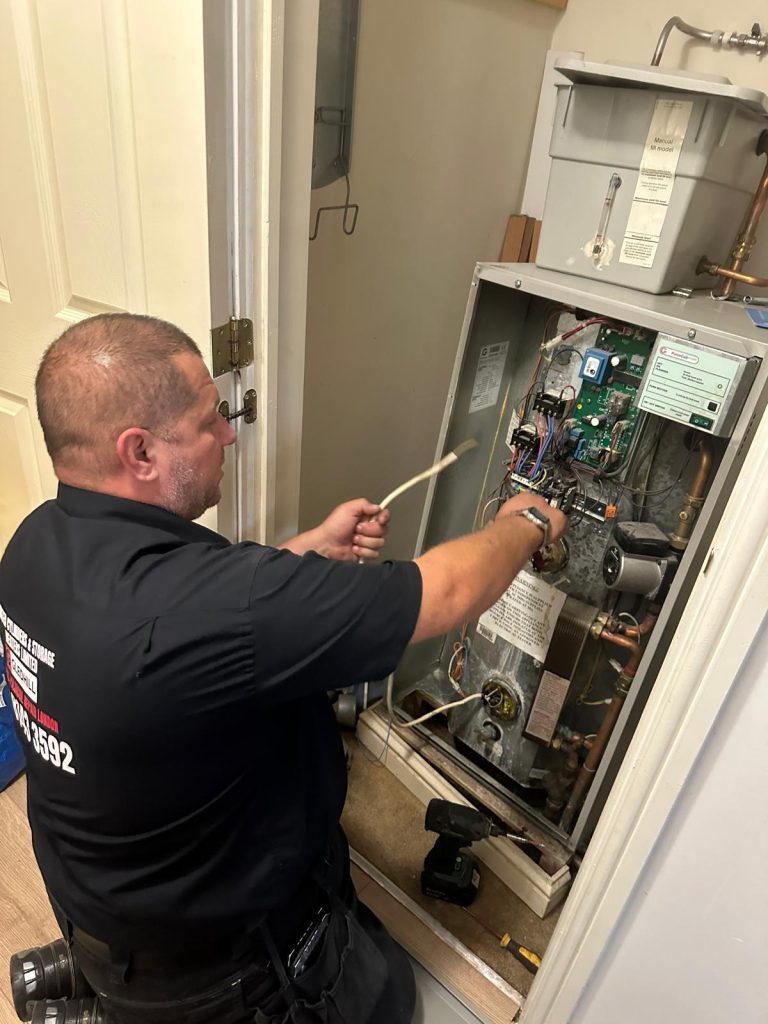
A PulsaCoil diagnosis can involve electrical controls and plumbing connections because the unit is an electric thermal store, not a conventional boiler. A qualified PulsaCoil engineer may check how the system heats and delivers water, then test relevant controls and connections.
A specialist pulsacoil assessment should not infer a failed part from one symptom alone. Checks can involve an immersion heater, thermostat, printed circuit board (PCB), temperature sensor, pump, valve or seal. The exact checks depend on the model and the system’s operation.
Diagnostic areas can include:
- Immersion heater and thermostat
- PCB and temperature sensor
- Pump and flow components
- Plumbing connections, valve and seal
In PulsaCoil Stainless systems, domestic hot water passes through a plate heat exchanger. This component transfers heat from the stored water to the water supplied to taps. Hard-water scaling can reduce heat transfer through the exchanger, so water quality and the system’s performance may form part of an assessment.
Electronic controls in the Stainless model include a PCB, pump, sensors, flow switch and plate heat exchanger. A qualified PulsaCoil engineer can check the relevant parts and plumbing together, rather than treating electrical and water issues as unrelated. The installer should confirm that the electrical setup suits the PulsaCoil Stainless off-peak supply.
A circuit problem or a water-delivery issue can involve different parts of the system. Do not treat a component on the checklist as a confirmed fault until it has been tested.
How Can You Identify Your PulsaCoil Model?
The exact model name on the appliance label is more useful than a general description such as “old PulsaCoil”. Use the wording printed on the label, rather than a remembered name, because model-specific parts and controls can differ.
The model range includes several generations and versions. Check the full label or supplied paperwork as your information source, then share the name when arranging a diagnosis. The list groups the main PulsaCoil models:
- PulsaCoil Thermal, PulsaCoil 3 and PulsaCoil 2000
- PulsaCoil A-Class and PulsaCoil 3D
- PulsaCoil BP and PulsaCoil Eco
- PulsaCoil Original or 1
- PulsaCoil Stainless
Some details apply only to a particular model. The A-Class has a 3 kW, 14-inch Incoloy immersion heater, an 11-inch rod thermostat and a separate manual-reset overheat cut-out. These specifications should not be assumed to apply to other PulsaCoil systems.
On an A-Class, a red fault light or a green light that has disappeared can indicate overheating. Its Economy 7 heating period is generally around 12:00 to 7:00 am. Economy 10 adds a top-up period between 15:00 and 18:00.
Keep the label details with any notes about heating operation, especially if off-peak timing seems different. Treat a red A-Class fault light, or a green light that has disappeared, as a reason to arrange service-engineer attention.
What Affects Repair Cost and Visit Time?
Straightforward PulsaCoil repairs often take 1-3 hours, though a more involved fault or unavailable part can extend the job. The work may take longer if diagnosis reveals that further checks or a return visit are needed.
A PulsaCoil quote can include a diagnostic or call-out charge, labour, parts and VAT. Ask for transparent pricing that separates these items, so you can see what the quoted repair covers. Confirm whether the price includes the parts needed to complete the work.
For context, DA8 Electrician Erith’s 2026 emergency electrical charge in Erith is £47.50 ex VAT per half-hour. This is a charge for that provider’s emergency electrical work, not a PulsaCoil repair quote or a price for another provider.
Emergency repair terms can differ between providers. Ask what an emergency appointment means, whether the quoted rate applies to the full visit, and whether a return visit carries another charge. This is especially useful if the first visit is for diagnosis and the required part is not available.
Time on site and the total cost are separate questions: a short first visit may not include a completed repair. Ask for a written breakdown before authorising work, including any call-out fee and parts charge. Compare written quotes only after checking that they cover the same work, parts, VAT and any return visit.
Should You Repair or Replace the Unit?
A leak or breakdown does not by itself prove that the whole unit needs replacing. A failed serviceable component may be repairable, while an irreparable internal cylinder leak may make replacement necessary.
The location and condition of the damaged part matter. On a PulsaCoil A-Class, a leak may come from the immersion, external pipework or cylinder. A leak at an accessible connection does not automatically mean the cylinder has failed.
| Finding | Possible route | What must be checked |
|---|---|---|
| Failed serviceable component | Repair may be suitable | Component condition and part availability |
| Leak at an accessible connection | Assess for repair | Pinpoint the leak and check surrounding damage |
| Irreparable internal cylinder leak | Replacement may be necessary | Confirm cylinder condition and repair feasibility |
A qualified PulsaCoil engineer can identify whether the fault lies in a serviceable part or the cylinder itself. Part availability can also affect whether a repair is practical. The system’s age alone does not establish that replacement is the right option.
PulsaCoil Stainless warranty terms include a five-year sliding-scale cylinder warranty and a one-year manufacturer parts warranty. The one-year installation workmanship warranty applies to work carried out by PulsaCoil Group. Check the terms for the installed model and the work involved.
The PulsaCoil 210L Stainless product information states that the thermal store does not require annual maintenance or a safety check. That statement is specific to this model and does not establish the requirements for every PulsaCoil system. Ask for the failed part or leak location to be identified before deciding between repair and replacement.
What Should You Check Before Choosing a Replacement?
Check the available height and access route as well as the listed cylinder size before choosing a replacement. The PulsaCoil Stainless range comes in three sizes, with left-hand and right-hand versions available.
These figures describe the cylinder itself. All three sizes have a 550 mm diameter, but their height and weight differ:
| PulsaCoil Stainless size | Actual capacity | Height | Empty weight | Full weight |
|---|---|---|---|---|
| 150L | 151 litres | 1,112 mm | 35 kg | 186 kg |
| 180L | 181 litres | 1,300 mm | 39 kg | 220 kg |
| 210L | 210 litres | 1,488 mm | 47 kg | 258 kg |
The cylinder dimensions alone do not show the full installation clearance. Allow space for pipework, fittings, the feed and expansion tank, electrical components and servicing access. The route through the property also matters when moving the cylinder into position.
The 210L PulsaCoil Stainless uses a black rectangular feed and expansion tank. This additional part affects the space needed around the cylinder. Have the installer check the proposed location and access route, rather than relying only on the vessel’s stated height and diameter.
Capacity, position and access all affect whether a replacement can fit and be serviced in the intended space. Ask the installer to confirm the complete installed footprint, including fittings and servicing access.
How Do You Arrange a PulsaCoil Repair in Erith?
Having the model, symptoms and access details ready makes it easier to explain the problem when requesting an appointment. The appliance label or supplied paperwork can identify the model, while a clear photo may help if the wording is difficult to read.
Before contacting a provider, collect these details:
- Exact model name or a clear photo of the appliance label
- Symptoms and when they began
- Any display code or repeated circuit tripping
- Access details and suitable appointment times
A display code can help describe the issue, but it does not replace a proper diagnosis. Note when the circuit trips or when the hot-water supply changes. This gives the person arranging the visit a clearer account of the problem.
Confirm that the provider’s service areas include your Erith address and ask about current appointment availability. Check any diagnostic or call-out charges before agreeing to a visit. Availability can differ between providers, so do not assume a particular appointment time is offered.
Ask what the provider means by an emergency appointment, including the likely response arrangement and any related charge. Do not assume that every provider offers online booking or same-day attendance. Confirm the appointment time and charges directly with the provider before agreeing to the visit.
Book an Erith Assessment With the Right Details
If your hot water remains unreliable, request an assessment from a qualified PulsaCoil engineer serving Erith. An assessment can establish what needs attention, but it does not guarantee a particular diagnosis or repair outcome.
Contact the provider with the model details and a clear account of the issue. Confirm current appointment availability and any diagnostic or call-out charges before work starts. Ask what the assessment includes, so you understand what has been agreed for the visit.
Keep the discussion focused on the system’s condition and the work proposed. You can decide whether to authorise a repair after the engineer explains the findings and any costs. Have your model details and symptom notes ready when you contact the provider.