
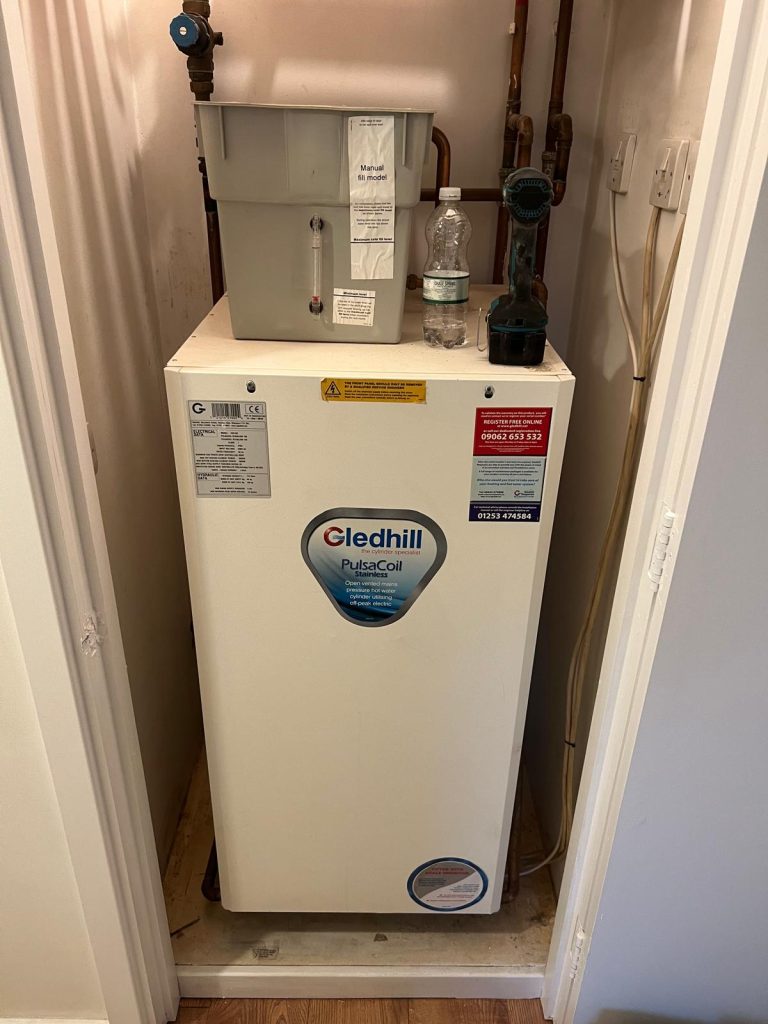
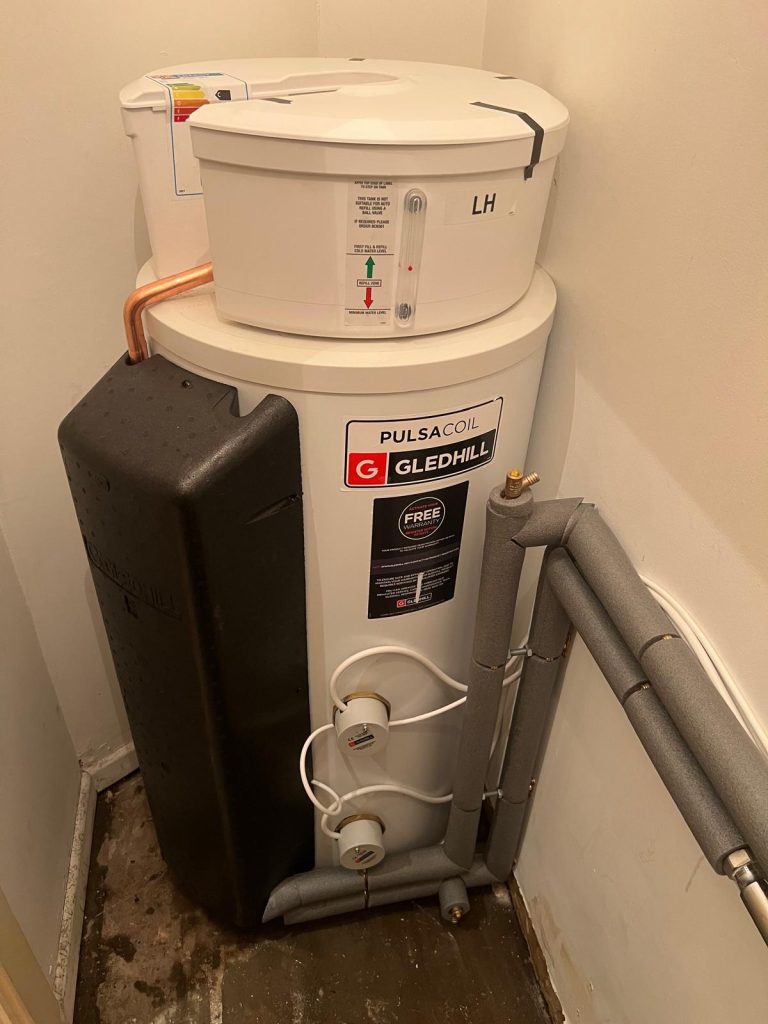
A PulsaCoil fault can leave an Euston home without reliable hot water, so identifying the symptoms is the first useful step. In London, a loss of hot water can disrupt washing, cooking and other daily routines. A thermal store is an open-vented tank that holds heated water and transfers heat to incoming mains water through a heat exchanger.
When the appliance stops working, a specialist familiar with thermal stores can assess the cause and explain suitable repairs. The time and work required depend on the diagnosis, so an initial assessment is more useful than guessing which part has failed. Euston homes may have different models and system layouts, making clear details about your appliance helpful.
This service page helps you prepare for a local repair visit, understand likely repair options and consider replacement if needed. A qualified PulsaCoil engineer can assess the appliance and discuss the work before you decide whether to proceed. Note when the problem began and whether the hot-water supply has changed, then keep that information ready for the engineer.
What should you do when your PulsaCoil stops producing hot water?
No hot water can point to an immersion heater, thermostat or valve fault, while weak flow can have a different cause. Symptoms alone cannot confirm which part has failed, because several faults can produce similar changes in hot water. A PulsaCoil thermal store holds water in an open-vented tank at atmospheric pressure and transfers heat to incoming mains water through a plate heat exchanger.
Models include the PulsaCoil 2000 and PulsaCoil A Class. Record what has changed before arranging a repair, without opening the casing or touching electrical parts. These symptom notes can help an engineer decide what to inspect.
- No hot water or lukewarm water: note when the change began and whether the temperature has varied since.
- Weak flow: record whether the water temperature is also falling; a scaled plate heat exchanger can contribute, but an assessment must confirm the cause.
- Leaks: note where water appears, without touching electrical parts or trying to remove panels.
- Tripping electrics: stop using the affected unit and seek qualified help instead of repeatedly resetting it.
Weak flow may also have a cause elsewhere in the system, so it does not prove that the plate heat exchanger is scaled. The location and timing of a leak can help the engineer distinguish a connection issue from a problem inside the appliance. Keep any notes away from the unit if there is water nearby.
If water is near electrical components or the fuse board keeps tripping, leave the unit alone and arrange a qualified assessment.
Which PulsaCoil faults can an engineer repair?
A repair may involve a failed immersion heater, thermostat, control board, valve or another component, so the engineer tests the unit before recommending parts. A qualified PulsaCoil engineer can inspect the immersion heater, thermostat, safety overheat cut-out, valve, sensor, PCB, pump and plate heat exchanger. The diagnosis should be confirmed before any repair work starts.
On the A Class, the immersion heater is a 3kW, 14-inch Incoloy element, with an 11-inch rod thermostat and a separate manual-reset safety overheat cut-out. An element in good condition measures about 18 ohms, a result an engineer can use during testing. The A Class 3kW immersion heater is one component that may need replacement if tests confirm failure.
Warning lights offer clues, not a definite diagnosis. On some early A Class models, a red light flashing once per second can mean the unit has cooled. The On Peak Boost button can reheat it, with automatic reheating scheduled at midnight. Follow the exact model instructions for any control use.
On later A Class models, a slowly flashing red light can indicate a possible immersion-heater failure, though a burned-out power relay can cause the same pattern. A red light flashing four times per second means the control board detects overheating. A faulty board can show that warning when the unit is cold, so the pattern alone cannot identify the failed part.
A scaled A Class plate heat exchanger can gradually lower the maximum hot-water temperature, then reduce flow at the tap. Repairs may involve cleaning or replacing a component, depending on the confirmed fault and available parts. The engineer should explain the proposed work before fitting anything.
The older PulsaCoil 2000 is discontinued. Parts may still be obtainable, although a provider that supplies them may not service or install that model. Give the engineer the exact model name and describe any warning-light pattern without opening the casing.
How much does PulsaCoil repair cost in Euston?
A standard-rate repair starts with £229.99 for the first hour, with additional labour and parts charged separately. PulsaCoil Group lists this rate including VAT, then charges £57.50 per additional 15 minutes, including VAT. Parts and materials are charged at cost price plus 20%.
The company also lists a £399 fixed-price repair, with no call-out, excess or labour charges under that offer. Its published terms include 12-month cover. The table compares those named options; other repair services in Euston may set different prices and terms.
| Service option | Initial charge | Further charges | Cover |
|---|---|---|---|
| Standard rate | £229.99 for the first hour, including VAT | £57.50 per additional 15 minutes, including VAT; parts and materials at cost plus 20% | 12-month parts-and-labour warranty on installed parts |
| Fixed price | £399 | No call-out, excess or labour charges under the stated offer | 12-month cover |
For standard-rate work, the final charge depends on the diagnosis, parts needed, access to the appliance and work required. PulsaCoil Group lists same-day or next-working-day appointments for its standard-rate repair service. These are its listed terms, not a promise that every Euston engineer offers the same appointment availability.
Ask whether a quote includes VAT, parts, labour and any return visit before agreeing. Confirm which warranty applies to the parts fitted, since the standard-rate terms cover installed parts for 12 months. Ask for the full scope and charge in writing before authorising work, especially if the diagnosis changes.
When should you repair or replace a PulsaCoil?
Repair makes sense when the diagnosed fault can be addressed and the cylinder remains serviceable; a failed cylinder may make replacement necessary. A leak at a connection or valve may be repairable, while an irreparable leak in the internal cylinder can mean the whole appliance needs replacing. The engineer’s assessment should distinguish between these situations.
For an A Class, PulsaCoil Group’s fixed-price repair covers serviceable parts and repairs up to £550. If the internal copper cylinder has an irreparable leak, the refund is reduced by £199 for the call-out. These limits apply to that fixed-price repair option, not necessarily to other service arrangements.
Repeated repairs may affect the choice, particularly if the same fault returns or the appliance needs several different parts. Ask about the cylinder’s condition and whether suitable parts are available for your model. A recommendation should account for the work needed now as well as the likely value of keeping the existing unit in service.
A replacement quote should make clear what will be removed, what new equipment will be installed and whether the existing system needs changes. Compare that scope with the repair proposal, rather than deciding by the appliance’s age alone. Ask the engineer to explain whether the proposed work fixes the cause or only restores one affected component.
What should you check before booking a repair in Euston?
Before booking, check that the engineer handles your model and can explain the diagnostic work and charges clearly. PulsaCoil thermal stores differ from unvented cylinders, so do not assume that G3 regulations for unvented cylinders apply. Ask about the engineer’s relevant training and competence for electrical work.
Prepare these details when you arrange a service visit:
- Read the model and serial details from the label without moving or opening the appliance.
- Describe the symptoms and when they began.
- Note any visible leak or electrical warning without dismantling the unit.
- Explain access arrangements and whether the engineer will need parking.
- Request the written scope, charges and warranty terms.
Warranty conditions vary. PulsaCoil Group’s extended warranty requires company installation and registration within one year of installation, plus manufacturer warranty registration within six months of purchase. It also requires annual servicing by the company or an approved engineer.
That extended cover applies during normal working hours, Monday to Friday, 9am to 5pm. Exclusions include sludge, scale, system blockages and external pipework more than 0.5 metres from the boiler. These terms relate to that cover and do not establish the conditions of every warranty.
Ask the repair service to state who will carry out the work and which warranty terms apply to your appliance. Keep the written quote with your model details, so you can compare the agreed work with the final invoice. Check the warranty paperwork for registration and servicing conditions before relying on it to cover a repair.
What replacement PulsaCoil models and sizes are available?
A replacement choice depends on required capacity, cupboard clearance, household use and the installation quote. PulsaCoil Stainless comes in 150L, 180L and 210L, with supply-only prices from £1,336.86 and supplied-and-installed prices from £2,695. It has a five-year sliding-scale cylinder warranty and a one-year parts warranty.
Advance ECO ETS comes in 160L and 210L, with supply-only prices from £1,380 and supplied-and-installed prices from £2,745. Its cylinder guarantee lasts 10 years, and its fitted-component guarantee lasts two years. These models have different capacities and warranty terms, so compare the product and installation quote together.
PulsaCoil ECO Stainless is available in 150L, 180L and 220L sizes. The appliance dimensions below exclude the recommended 100mm installation base. Minimum cupboard dimensions and full weight also matter when checking whether a unit can be installed in your home.
| ECO Stainless size | Appliance dimensions | Minimum cupboard dimensions | Full weight |
|---|---|---|---|
| 150L | 1145mm x 560mm x 630mm | 1895mm x 600mm x 645mm | 192kg |
| 180L | 1275mm x 560mm x 630mm | 2025mm x 600mm x 645mm | 213kg |
| 220L | 1575mm x 560mm x 630mm | 2325mm x 600mm x 645mm | 265kg |
The ECO Stainless 150 weighs 45kg empty, and the 180 weighs 48kg empty. The 220 weighs 55kg empty. Their full weights rise to 192kg, 213kg and 265kg respectively, so the route into the property matters as well as cupboard fit.
Heated-water figures differ by size and tariff period. The 150 uses 80 litres heated on-peak and 147 litres off-peak; the 180 uses 85 litres on-peak and 165 litres off-peak. The 220 uses 111 litres on-peak and 210 litres off-peak.
ECO Stainless regulates outlet temperature to approximately 52°C, which you cannot adjust. The appliance also automatically limits flow to 15 litres per minute. Match the size to household hot-water use, then check that the installation space allows for the base and required access. Measure the full cupboard and access route, and have an installer confirm the correct capacity before ordering.
Book Pulsacoil Repair Euston
If your PulsaCoil is not providing reliable hot water, request a professional assessment and share the model details you can read safely. Choose a repair service that confirms Euston coverage and experience with your specific model.
Tell the service what has changed, ask what appointment availability it has, and request an itemised scope and charge. You can then compare the proposed work with your needs before approving repairs. No appointment time should be assumed until the service confirms it.
Keep the agreed terms with your appliance details, especially if the engineer recommends a different repair after inspection. Arrange the visit once you understand what the engineer will inspect and what you may be charged.